
Tucson Rodeo Parade – 101 Years of Tradition with Herb Wagner
Episode Highlights
- 🐎 A 101-year tradition in motion: Herb Wagner shares how the Tucson Rodeo Parade—now the nation’s longest non-motorized parade—continues to grow as the rodeo celebrates its 101st year in 2026.
- 📜 The origin story starts with polo: Learn how Frederick Leighton Kramer, a polo enthusiast and Eastern transplant, helped spark the first rodeo (and parade) back in 1925 to raise funds and draw visitors to Tucson.
- 🏙️ Downtown Tucson was always part of the plan: Early parade routes were designed to wind through downtown past local businesses—because the parade wasn’t just tradition, it was also a boost to the local economy and community energy.
- 🎺 A parade with serious pageantry from day one: Military bands, community entries, and rodeo participants on horseback helped establish the parade as the official kickoff to rodeo festivities.
- 🤠 Rodeo Days = Tucson culture: From schools closing for Rodeo Days to the fun detail of kids getting to wear jeans to school, this episode captures why rodeo week feels like a shared Tucson ritual.
- 👩🌾 A surprising early trailblazer: Hear about Fox Hastings, a standout early competitor who took part in events including steer wrestling—a fascinating example of Tucson’s long history of pushing boundaries.
- 🤝 Volunteers make it happen: Herb explains why the parade depends on community support—250+ volunteers helped on parade day last year—and how there are roles for all interests and experience levels.
- 🛠️ No experience needed: Want to help with wagons, museum docent work, or parade-day support? Herb’s message is simple: they’ll teach you.
- 🌵 How to get involved: Volunteer sign-up is available at tucsonrodeoparade.org (look for the volunteer link).
Episode Description
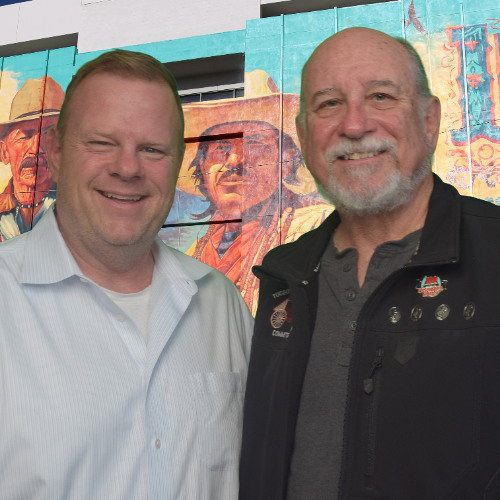
Welcome back to Life Along The Streetcar—where we celebrate the people, places, and traditions that shape Tucson’s urban core (and, every now and then, tempt us into a very Tucson road trip). In this episode, host Tom Heath sits down with Herb Wagner of the Tucson Rodeo Parade to explore how a century-old tradition became the nation’s longest non-motorized parade—and why, in 2026, the community is gearing up for a truly landmark year: the 101st rodeo celebration and another unforgettable parade morning.
What follows is the story behind the spectacle: how it started, why it matters, and how you can be part of it.
🐎 From a Polo Dream to a Downtown Tradition: How the Tucson Rodeo Parade Began
The origin story of the Tucson Rodeo Parade starts with an unlikely spark: polo. Herb shares how Frederick Leighton Kramer, a transplanted Easterner and passionate polo enthusiast, moved to Arizona for health reasons (a dry climate was the prescription of the era). Once here, he didn’t just adapt—he organized. Kramer helped assemble polo teams locally, even helping launch the University of Arizona polo team.
But the big idea came when he wanted to take his team back east to compete against old rivals. To raise money, he approached Tucson business leaders with a plan: host a rodeo—something that would draw visitors and boost local commerce. At first, it sounded a little wild. Tucson already had working ranches and weekend rodeos where cowboys competed for “jackpot” money. Why would Tucson need another rodeo?
Kramer’s argument won them over: this could be a destination event.
In 1925, Tucson’s first official rodeo launched as a three-day event—and to promote it, Kramer insisted on something that would bring the whole town to the streets first: a parade. Early on, local businesses sponsored entries, rodeo participants were required to ride in the parade, and downtown merchants favored a route that flowed past their storefronts—because when the parade ended, they wanted the crowd ready to step inside for lunch, shopping, and celebration.
Even then, the parade was a big deal: it featured military bands and a carefully planned route that began downtown and continued out to the rodeo grounds at Kramer’s Field, near the area where University Medical Center sits today. The parade didn’t just announce the rodeo—it led Tucson to it.
🤠 Why Rodeo Week Still Feels Like Tucson’s Biggest “We’re All In This Together” Moment
Some cities have festivals. Tucson has Rodeo Days—a tradition with real cultural weight, layered with memories, identity, and community pride. Herb and Tom talk about how the rodeo and parade didn’t just become annual events; they became something Tucson organizes its life around.
One of the most vivid examples: when the rodeo expanded to four days in the early 1940s, it helped cement the tradition of schools closing Thursday and Friday—so students could watch (and participate in) the parade and join the festivities that followed. For kids, it wasn’t just time off; it was a rite of passage. Herb recalls one detail that perfectly captures the era: during rodeo week, students could wear jeans to school—something that wasn’t normally allowed. (And for girls, wearing pants wasn’t common at all.) Those small changes made rodeo week feel like a special season in Tucson, not just an event on a calendar.
Tom also pulls on a fascinating thread about early rodeo participation—and Herb delivers a standout fun fact: Tucson’s rodeo history includes a pioneering female competitor, Fox Hastings, who competed in multiple events and even did steer wrestling. Herb describes the photos they still have—Hastings wearing an old leather football helmet for protection while she competed, a detail that makes the moment feel immediate and real. The takeaway isn’t just “look what happened back then”—it’s that Tucson has a long history of being a little ahead of the curve, even more than a century ago.
This is why the rodeo parade endures: it’s not merely a performance. It’s a living tradition where Tucson’s past keeps showing up—on horseback, in wagons, in bands, in crowds lining downtown streets before breakfast.
🤝 How to Volunteer for the Tucson Rodeo Parade: Be Part of the 101st Year
If you’ve ever watched a parade and thought, “This must take a small army to pull off,” Herb confirms it—then invites you to join that army.
Despite how polished the Tucson Rodeo Parade looks on parade morning, it runs on people power. Herb is clear: they absolutely need volunteers. The committee has limits on membership (by bylaws, up to 36 members), and while there’s a dedicated core group, the parade itself depends on a much larger volunteer force. In 2025, Herb says they had over 250 volunteers supporting parade day—on horseback and on foot.
A few key volunteer roles Herb highlights:
-
Foot marshals: essential for crowd control, keeping roads clear, and helping the parade flow safely.
-
Support roles on parade day: logistics, coordination, and general “make it happen” tasks that keep everything moving.
-
Museum help: docents and volunteers who support the wagon and museum experience.
-
Wagon restoration and upkeep: helping refurbish and repair wagons—no experience required.
And that last point matters: Herb emphasizes you don’t need to know anything to start. Many volunteers learn on the job, often from longtime committee members with ranch and farm backgrounds who pass down practical knowledge. Even visitors to the museum contribute unexpected insights—so volunteering becomes a two-way exchange: you give time, and you gain stories and skills you didn’t know you were looking for.
To sign up, Herb directs listeners to the official site: tucsonrodeoparade.org and the volunteer link.
🚩 Ready to Join the Parade Team?
If this episode proves anything, it’s that Tucson traditions aren’t kept alive by nostalgia—they’re kept alive by people who show up. The Tucson Rodeo Parade is heading into its 101st year, and whether you’re a lifelong Tucsonan or someone still discovering what “Rodeo Days” really means, this is a rare chance to step into a living piece of local history.
Call to action: Volunteer.
-
Visit tucsonrodeoparade.org and click the Volunteer link to sign up.
-
Bring a friend—many volunteer roles are perfect for pairs or small groups.
-
Want a meaningful way to connect with Tucson? This is one of the most hands-on ways to do it.
And if you enjoyed this deep dive into Tucson’s stories and traditions, you can find more episodes, archives, and ways to connect at lifealongthestreetcar.org. Follow the show on Facebook at https://www.facebook.com/LifeAlongTheStreetcar and listen on SoundCloud at https://soundcloud.com/lifealongthestreetcar.
See you downtown—and maybe on the parade route.
Transcript (Unedited)
And then I hit the wall. Try not to ramble on. You finish the cocktails. And when you finish the perfect. So I’ll just do a quick intro to the way I think. The echoes on the the, the way I’ll do this is I’m going to do the intro for the podcast, but they’ll edit it for the show, because with the show I do the intro on the radio program.
So this will. So just bear with me for a second here. And it’s Wagner, right? Yes. Okay. I keep want to say Wagner because if you’re good you’re Wagner. All right. I’m.
Actually. Oh. Welcome back to Life Along the Street Car podcast. This originally aired on Downtown Radio 99.1 FM and streaming across the globe on downtown radio.org. We’d like to cover the people, the places, and the events in the urban core that are making a huge impact socially, culturally, economically, and occasionally we take a little bit of a road trip, and that’s what we are doing today.
We’ve got Herb Wagner with the Tucson Rodeo Parade, and this year in 2026, it’s going to mark the 101st year of the rodeo and the nation’s longest non-motorized parade. It has become. I think it’s always been a cultural, social and economic impact in our region. And, I’m excited, to chat a little bit about it and find out more about herb and the rodeo.
So, herb, welcome in, you know, glad to be here. All right. Well, you know, you and I met briefly at, the celebration for Tucson’s birthday at the Presidio, 250 years. And, the rodeo just seems like a little a little baby compared to that. Well, it is just celebrated the 100th year. Working on what number? 101. Well, I moved to Tucson in 1993, and I remember I was in the food business and someone asked me if, they could have time off for rodeo days.
And being from Columbus, I sort of laughed like, haha, yeah, I’m the new kid, but you’re not going to fool me with that. And then I found out it’s a thing, you know, we shut down for a few days. I think it was three days at one point. So there’s a lot to cover. We got a museum, we’ve got an event, we’ve got a rodeo.
We’ve got a parade. Where do we start? Well, I guess we can go back almost 101 years. Okay. There was a gentleman, a transplanted, Easterner by the name of Frederick Layton Kramer. He was a polo enthusiast. Okay? He had polo teams back east that, competed very well, being, he had some, health problems, lung issues.
And of course, back then, the thing to do is go to the dry climate. So he moved out here to Arizona. And being the polo enthusiast, he was, he got polo teams together. He in fact started the polo team at the University of Arizona. And one of the things he wanted to do was take his team back east to compete with his old buddies, back in new Jersey, in New York.
So his idea and he approached some of the local businessmen was to hold a rodeo because he grew up back east. He remembers, the traveling wild West shows the, you know, Bill Cody and and all these, guys who brought the Native Americans and the gunfights and, oh, that whole thing. And they had a rodeo as part of those Wild West shows.
He remembered that. Thought it’d be a good idea to come out here, you know, and have one out here to, get some money to send his team back east. Well, most of the local businessman thought he was a little crazy, because with all the, ranches and things that we have here in Tucson, the working ranches outside of Tucson, there were rodeos every weekend.
The cowboys all competed against each other for, you know, jackpot type money. But they finally warmed to the idea, and he talked about how this might be able to bring, visitors to Tucson and, if they promoted it correctly and their businesses would, benefit from it. So they all got on board. And so in 1925, we had the first Tucson rodeo, and it was a three day event that began on Friday, ran through Sunday.
But one of the, things that he wanted to do to promote the rodeo was have a parade at the beginning of, the event. So, he, the local businesses all sponsored some type of, an entry in it. He required all of the participants in the rodeo to ride in the rodeo parade. And, of course, the businessmen who were here in Tucson wanted the parade to win, to pass their business so that people standing outside would be ready when it was over.
Perhaps they’d go inside and eat lunch or purchase or do something like that. So it was a quite a circuitous route around downtown Tucson back then. It was led by, the Nogales, U.S. Army Band that was, stationed in Nogales. They had another Army band from, Fort Watt, Ukiah, that came in there.
The University of Arizona band did not participate in the parade, but they played at the rodeo. So the parade began, one through downtown Tucson and then headed straight out to the rodeo grounds, which were at, Cramer’s ranch. Called Cramer’s Field out there, which is about the location of where the university hospital is today. So people followed the the whole group out there for the first day’s rodeo on Friday afternoon.
There was born in the Tucson Rodeo Parade. Well, so then the parade, it is slightly older by a few minutes than the rodeo itself, basically. Yeah. So we’ve we’ve traditionally been the kickoff for the Tucson rodeo. It expanded to four days, in, in the early 1940s. And that’s where the, the idea that schools would close on the Thursday and Friday of rodeo weekend so that students could both participate and come watch the rodeo parade on Thursday and then join in with their first festivities for the rodeo the rest of the week.
Something that everybody looked forward to, especially the kids, was that they didn’t have to wear. They were able to wear Levi’s to school because back then there were you know, it was not you didn’t wear jeans to school. Girls never wore pants. But rodeo week, they were able to wear jeans. So special for many reasons. Yes. The, this idea, though, you said that we were doing rodeos every weekend when they formalized it into the into what became the Tucson Rodeo was it those same local cowboys, or did it immediately bring people in from around the United States to participate?
There were a lot of local cowboys, but at the time there was a, an organization called the Cowboy Turtle Association, which eventually became the Pro Rodeo Cowboys Association that we have today as the professional cowboys. We call it a union or group. But yes, they brought in some from, around the country, but most of them were local, participants.
How did the how did the, the local cowboys do versus the, very well. Yeah. Very well. Most of them had, skills that they used every day on the ranch, which of course is how the whole rodeo, began. But, some, some of those cowboys would travel with those Wild West shows and things like that, the pros, so to speak.
But, it became a melding of local and, talent and things until the, the association took over and said you had to be a member to be in the professional rodeo. And rodeos are not I mean, obviously they were not new at the time. Were were rodeos of this size, like like, like a city kind of hosting a rodeo?
Was that done a lot back there? There were some around the country, mostly back East and in the Midwest, Oklahoma and Texas. And, actually in California had quite a few rodeos. Okay. And then, and this could be completely wrong, because I make up a lot of things and I don’t do a lot of research.
Female participation or female riders. In the first rodeo, there were female writers. In the first rodeo, they were more of a, An anomaly. Yeah. There was one, a woman by the name of Hastings. Fox Hastings. Excuse me. Who? Bulldog and rode, steer, rode steers. Rode, wild. Rough stock and, and also participated in roping.
She was a unique thing. She actually, did steer wrestling. And we have photos of her. She’s wearing an old leather football helmet when she did it to protect her, whereas the other Cowboys didn’t, you know, and that what I have heard, it was that Tucson may have been one of the very first to include females in the actual rodeo.
It’s, it’s my understanding of that is true. All right, there we go. See, we’re always trendsetters. Even 101 years ago. That’s right. Well, so then let’s let’s kind of fast forward a little bit, maybe just 100, let’s see an 80, 60, 70, 80 years at this point, try to figure out when you got involved.
You involved in the 80s? Yes. I volunteered for my first rodeo in 1983. Were you a cowboy? Not a cowboy in any means. Okay. I ride horses, friends, horses, and. But mostly just, you know, pleasure riding. I, I can’t rope, I can’t, I wouldn’t want to be on a horse. I’ve fallen off many horses, but, it’s not.
Which I know is not good for the rodeo competition. Not. Not at all. So 1983, like, hey, I think I’ll just go down and volunteer. Well, I had some, friends whose fathers were involved with the rodeo parade. They were members of the committee, and, they, they asked some of us to come down on a Sunday to help push wagons around because we were, you know, the younger guys.
I was I think I was 26 or so and, they, we went down as a group, had some fun, enjoyed it. And one of the days when I was down there, I didn’t even realize. I mean, I went to the rodeo parade when I was a kid, obviously. So my sister march in the high school band and all that.
In fact, she was, on horseback for the Southpoint Lancers. She was the lancer on horseback in a couple of the parades back in the late 50s. So, but anyway, I was down there and had no idea that there was a museum. And one of the older guys, and I call him an older guy, but he’s probably younger than I am now at the time.
Yeah. Took me aside and started showing me around this museum, that they had put together. And I was just being born and raised here. I was like, wow, I didn’t know this existed. This is really cool. I’m in. Let’s, you know, let’s, let’s be part of it. So it became sort of my civic, adventure.
So when did the when did the museum come about? Because that was in the 80s. So this is it’s been there for a while. So yes, it was, it was the idea came about in the mid 60s. And they thought with all the wagons that we have in our collection, why don’t we put them on display except once a year?
So, they decided to use the, workshops that we had down there, which is that the rodeo grounds, which used to be the, Pima County Fairgrounds, before that, they were the stables for the city of Tucson for their horse drawn equipment back in the early. So where the where the, the the the rodeo happens now was the fairgrounds.
Yes, I knew that. But prior to that, prior to that, it was a city owned property that had stables on it. I didn’t know that. Yeah. Had stables there to things. There. It’s fabulous because, you know, back in the early 1900s, we still had lots of horse training equipment, but anyway, that they decided to, build up this little museum.
And in 1965, they dedicated it in true rodeo fashion, by having the 1965 rodeo queen ride through the, cutting ribbon at the main entrance. Of course, of course. And, I’m assuming over the years the collection has, has probably grown quite a bit. Yeah. So over the years and hearing about how we’ve acquired all these wagons, you know, a lot of them have been given to us by the city of Tucson, has given us, several of their old wagons that they, that we kind of acquired as we took over the, the property back in the early 1930s.
But we, we were able to purchase some the old this is all in a history of the, of the parade and museum. We were able to acquire, some that were, from a, collection of from a woman in Phoenix who put an ad in the paper, said, we want to get rid of all these.
We had a bunch of, buggies. They were still in crates. This is in the 1930s. Oh, my gosh. People, were getting, you know, weren’t using horse-drawn equipment anymore. And I don’t know if it’s just just junk to them at that point. Just clutter basically. So they went up and I think for the grand total of about $40, they brought back 12 buggies, brought them back, put them together.
And that was kind of the beginning of a real collection. And over the years we’ve gotten donations from, local farms and, ranches. We’ve acquired some from people from back east, some of our winter visitors who come out volunteered during the rodeo. And they remembered, you know, when I was in the farm, we had these wagons and all this.
And then my uncle has one, you know, back in the barn. Would you like it? Absolutely. So we’ve been acquiring wagons. For a long, long time. In fact, just this last summer, we acquired five, circus wagons from the, Scripps Miramar Ranch over in San Diego, as donations to our collection. So the, the, nation’s longest non-motorized parade just seems like it’s going to get bigger and bigger.
Well, we hope so. So I want to shift gears briefly and then come back to this, because just before we went on the air, you were telling me in about events I had no idea existed. But it’s it’s going to be in its fifth year in a couple of weeks. This is it’s called history. Really lived it. Tell us about this.
Okay. Well, we’ve thought about a few years back because, you know, being a small museum and in Tucson, there are lots of, you know, there’s a little association of, people that, have similar interests and for historical purposes. And we decided that, it would be kind of nice with the group, decided that it would be kind of nice.
We kind of got together to promote each other. So it started out by just having our fliers and leaflets at each other’s museums. And then the idea of came that, hey, how about we open, you know, we get together and kind of have a, a conference or a, convention and invite the public to look and see what we have.
We have a large area because it’s open, courtyard area and several buildings. So we we hosted it the first time five years ago. Invited all of our local museums, Arizona Historical Society, the State Museum at the University. The 3 or 4, automobile museums are here. Pima Air and Space Museum, all, to come down and and set up a display and, and promote themselves also other historic groups like the Southern Arizona Buffalo Soldiers Association, some of the lost descendants, the Tucson, group that’s there, we have the Chinese, cultural, society comes and sets up down there.
So we have a lot of different groups that get together. I think we had last year, just a guesstimating 27 different groups here in town that, set up for that one day. It’s free and open to the public. This year. We’re doing it on January 24th, a Saturday from 9:32 p.m., 9:30 a.m. to 2 p.m.. Public’s invited to come and see what, southern Arizona has involved.
And we have, and not just from Tucson. We have, like, you know, besides, other attractions like old Tucson and the Mescal movie set, the Empire Ranch Foundation will be there. We have, some folks from the, For what? UCA coming in. So, yeah, we’ve got a lot of, southern Arizona groups coming in.
So we invite the public to come and and visit and see what’s what’s available out there. I feel like I have another road trip coming in as we, we we talk about this, too. So, back to the parade. The rodeo, the museum. My understanding is that you are completely overwhelmed with volunteers and do not need any more help.
Is that is that correct? No, that’s not accurate. That is absolutely incorrect. Okay. How do people get involved? How do they support, they can, we always are looking for volunteers because we really can’t with our committee, by our bylaws, has a maximum of 36 members. Right now we’re down to about 25 full members. We’ve got ten associates who will be moving up with us, soon.
But, we can always use volunteers, because obviously, on parade day last year, we had over 250 volunteers helping us out, both on horseback and on foot. The foot marshals are very important to us. And keeping, the crowds under control, keeping roads clear, things like that. We also get a lot of help from the Tucson police, and other security agencies that we, hire to help us, but our volunteers, parade there essential.
Like a website. They can sign up. Yes, they can go to Tucson rodeo parade, dot org and, click on the little link for volunteers and put their information in there. And we’ll be, back in touch with them to get them ready. We have several, meetings to talk about the different types of volunteers that we have.
Okay. So you’ve got I mean, you’ve got all kinds of different things that can be done there. And now you throw in the history relived and and all of these other things. I’m sure they’re all kind of yeah, we can use we can use the museum docents. We have, folks that help us out in refurbishing and repairing the wagons.
You don’t have to know anything will teach you. Well, I learned that way. But because I didn’t know anything about, the wagons and I had some gentleman, some of the older gentleman who were part of the committee, who grew up on farms and ranches, taught me this and were passing the information along. And I still learn things every day from visitors to the museum who come from back east and point something out and tell me something was Herb Wagner.
We’re talking about the Tucson Rodeo Parade, the the wagon museum, the rodeo. The history man has got a lot going on this show today. I appreciate your time. I appreciate you spend some time with us and, successful 2026, and we’re going to have to catch up and talk more about, history relived as I get to.
I’m going to go check that out. And then maybe as we roll into, next year, we can kind of focus on that. But I really appreciate your time today. Sure. And don’t forget the rodeo parade on February 26th. Oh, yeah, 8 a.m.. You should probably go to that too. If you have any ideas or suggestions for our show, we encourage you to reach out to us through our social media, Instagram, Facebook, we’re on Spotify.
We’re all over the place. Just the handle is life along the streetcar, our websites, life along the streetcar.org for past episodes, audio, video information on our book, or just a simple way to contact us. I appreciate the support of our executive producer James Portis, our associate producer, Amanda Burns. And of course, each week we have the pleasure of Ryan Hood providing our intro and outro music.
I hope you tune in each week for more life along the streetcar. And until next time, stay curious to sun. And.