

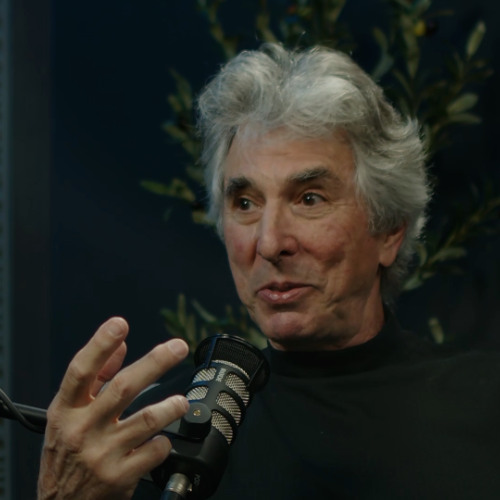
Meckler’s Lens- Photographing Tucson’s Soul, One Story at a Time
Episode Highlights
-
A downtown life, not a downtown visit 🏙️
Steven Meckler shares what it was like living and working in the heart of Tucson for decades—back when Congress Street storefronts, artist collectives, and a grittier energy defined the core. -
Old Tucson landmarks and the city that keeps shifting 🗺️
Memories of now-gone (or transformed) corners of downtown—including the block cleared for the transit center—and how those changes still live in the minds of the people who were there. -
Brooklyn roots, Tucson lens 🗽➡️🌵
Steven traces how growing up in Brooklyn and apprenticing in a pre-boom SoHo scene shaped his instincts for urban texture, street-level storytelling, and live-work creative spaces. -
The long road to “working photographer” (and the grind behind it) 🧗📷
From running a family business on Fourth Avenue to building a portfolio, making cold calls, and landing early commercial breaks—Steven describes the persistence it took to build a career in Tucson. -
Is photography art? The episode’s big question 🎨📸
Steven and Tom explore the line between commercial work and art—and why intention, craft, and story are what elevate an image beyond “just a job.” -
Environmental portraits: when the setting is the story 🌆👤
Steven explains his approach to portraits where the environment isn’t background—it’s a necessary character that completes the narrative. -
How a photo tells a story: the choices that matter 💡
Lighting, angle, mood, location, pose—Steven breaks down how every decision shapes meaning and emotion in the final image. -
Behind the scenes of Tucson Jazz Festival visuals 🎷⭐
A deep dive into the creative process behind iconic festival covers, from concept development to casting, staging, and the realities of making “magic” look effortless. -
Photoshop, assembled reality, and purposeful fabrication 🧩🌕
Steven explains how a striking cowboy/saguaro/moon cover image was built from real photographed elements—carefully planned, shot, and composited into a single narrative scene. -
“Joy” in one word—and turning it into a single shot 🎭😁
The story of a leaping musician image at the Rialto: how one-word direction became a fully realized photograph through clever casting and precise timing. -
The streetcar photo that feels like a subway scene 🚋🎶
A memorable moment where Steven describes directing a streetcar scene so nobody acknowledges the performer—capturing that urban truth of art happening while life moves on. -
Where to find Steven’s work (and see Tucson differently) 🔎📷
Steven shares how to connect with him and explore more of his photography, plus where some of his pieces live in local collections.
Episode Description
Downtown Tucson has a way of revealing itself slowly, one doorway, one alley, one night of neon and rain at a time. In this episode of Life Along the Streetcar, host Tom Heath sits down with Tucson photographer Steven Meckler inside Show Source Studios (2 E Congress St #804, Tucson, AZ 85701) for a conversation that feels like walking through the heart of the city with someone who has truly lived it.
Steven isn’t just a photographer who has worked downtown, he’s a longtime resident of it, a quiet witness to its rougher years, its reinventions, and its creative resurgence. Through his lens, Tucson becomes more than scenery. It becomes the story: the people who build things, the places that disappear, and the stubborn magic that keeps pulling artists back to the core.
What unfolds is part memoir, part masterclass, an intimate portrait of a man whose work doesn’t simply document Tucson’s culture, but helps define how the world sees it.
Downtown Tucson, Through Meckler’s Eyes
Steven Meckler’s relationship with Downtown Tucson is personal, physical, and decades deep. He describes how, soon after arriving in Tucson in 1980, he gravitated toward the very kind of live-work creative life he’d first seen in New York, setting up in a storefront studio on Congress Street, living above his work in an environment that was equal parts rough and beautiful.
From there, Steven’s memories become a kind of map, one drawn in vanished storefronts and half-remembered corners that still feel real to him. He recalls the era when downtown had a grittier edge, when small storefronts lined the blocks, when artists shared spaces next door, and when places like Wiccarama were just beginning. He talks about the moments when the city reshaped itself, like being told to leave when the area was cleared to make way for the transit center, and how even the gap where things used to be can still feel like a landmark.
Tom’s perspective, as someone who came to know Steven’s work years later, underscores the point: Steven’s photography isn’t about downtown, it’s from downtown. The conversation makes clear that Steven has not only watched the neighborhood change, he has stayed close enough to record its heartbeat in real time. Even when the city was “kind of seedy,” Steven chose to remain, not out of nostalgia, but out of belonging. A city, he explains, felt like home.
From Brooklyn to Congress Street: The Roots Behind the Lens
Steven’s Tucson story begins long before Tucson. Raised in Brooklyn, he carried an instinctive comfort with dense, lived-in urban life, an ease with the texture of streets, signage, and the everyday theater of people moving through a city. That sensibility sharpened when, after college, he found himself interning with an established photographer in New York, in a SoHo-era world of cobblestones and industrial workspaces, before the neighborhood became the polished cultural shorthand it is today.
That early exposure left Steven with a lasting image of what a working photographer could be: someone who lives alongside the work, inside a space that blurs the boundary between art and commerce. It’s an image he later recreated in Tucson, again and again, through the way he builds his practice and his life in the same geography.
The move west wasn’t driven by a romantic leap; it was tied to family. Steven’s father relocated to Tucson after his parents divorced, and as Steven finished school (with a degree in biology and a background that included medical photography work at Sloan-Kettering in New York), Tucson became the next chapter. He even spent time running his father’s used furniture/antique business on Fourth Avenue, learning the realities of work and survival in a new city while quietly keeping the photographic dream alive.
That dream didn’t land with instant success. Steven speaks plainly about the grind: building a portfolio, calling people, following up, waiting for the break that might not come, until it does. Over time, he earned commercial assignments, including a key opportunity photographing for IBM’s Tucson facility, work that helped him establish himself as a trusted professional. The deeper story, though, is how Steven’s background—Brooklyn streets, medical precision, downtown Tucson grit, merged into a signature perspective: grounded, intentional, and unmistakably local.
Storytelling by Design: How Steven Builds a Photograph
Steven Meckler doesn’t describe photography as “capturing” moments. He describes it as solving them. He’s candid about not walking around aimlessly with a camera. He wants a reason: a client need, a nonprofit project, a concept that requires visual translation. The part he loves most is the brief, the challenge of turning an idea into an image that communicates something more than surface beauty.
That philosophy comes to life when Steven explains environmental portraiture, a central thread of his work. In his view, the environment isn’t background, it’s a character. The portrait shouldn’t exist without it. And before he photographs someone he doesn’t know, he takes time to talk with them, to learn something that might shape the narrative. He admits that the story in the image isn’t always the subject’s exact truth; sometimes it’s Steven’s interpretation, his projection, his artistic synthesis. But there must be narrative, always.
Tom pushes deeper: how does that narrative get into the frame? Steven’s answer is both simple and expansive, every choice is storytelling. Lighting direction, hardness or softness of light, mood, angle, pose, time of day, location, the way a subject turns their head, each decision is a sentence in the visual story. And layered on top of that is another reality Steven names clearly: everyone involved has an agenda. The client, the subject, the designer, the publication, each wants something, and the photographer’s job is to turn that tangle of wants into something visually compelling.
The episode’s most vivid illustration of Steven’s process comes through a behind-the-scenes look at images created for the Tucson Jazz Festival. One cover looks impossibly perfect, and Steven happily demystifies it: the image is “real,” but assembled. A studio portrait. Desert saguaros lit separately with gels. A moon image from earlier work. Stars sourced externally. The artistry isn’t deception, it’s orchestration.
Another image begins with one word from festival leadership: “joy.” Steven translates that brief into a leaping musician captured at the Rialto, using the theater’s real lighting to create sparkle and atmosphere. Even then, he solves practical constraints creatively, such as choosing a performer who can jump repeatedly, directing the scene with precision, and shooting tethered so he can evaluate results instantly.
And then there’s the image that feels most like Life Along the Streetcar itself: a saxophone player on a streetcar while everyday people go about their business, deliberately not paying attention. Steven directs the world around the performer to keep moving, so the scene feels authentic, casual, alive. Tucson becomes cinematic not because it’s staged as a postcard, but because it’s staged as lived experience.
A Lens That Preserves the City—and Invites You In
By the end of the conversation, Steven Meckler emerges as more than a photographer. He’s a storyteller with studio lights and patience, a downtown resident with decades of memory, and a craftsperson who believes an image should mean something. Tom frames him as a kind of visual scribe, someone documenting Tucson’s history not with nostalgia, but with intent.
If you’ve ever wondered how a city builds its identity, this episode offers an answer: it happens through the people who stay, who watch closely, and who keep making work even when the neighborhood changes around them. Steven Meckler’s lens helps Tucson recognize itself.
Connect with Steven Meckler
-
Website: MecklerPhotography.com
-
Instagram: https://www.instagram.com/steven_meckler/
Explore more Life Along the Streetcar
-
Listen to more episodes and explore the project at LifeAlongTheStreetcar.org
-
Follow and share on Facebook: https://www.facebook.com/LifeAlongTheStreetcar
-
Hear episodes on SoundCloud: https://soundcloud.com/lifealongthestreetcar
If this episode resonates, share it with someone who loves Downtown Tucson, photography, or the stories hidden in plain sight. And when you look at a familiar street next time, pause for a second. You might start seeing it like Meckler does: as a narrative waiting to be lit.
Transcript (Unedited)
Okay. And you can one second higher. Okay. Yeah. All right, so it’s magic, guys. Welcome to life Along the Street Car podcast. This originally aired as part of a lifelong streetcar radio program on downtown radio 99.1 FM, streaming on downtown Radio Dawg, wherever you are in the world. And this week, we’re speaking with Stephen Meckler, the Tucson photographer whose portraits have become a snapshot of the people who shaped our city’s core.
Stephen has been capturing Tucson’s makers, dreamers and doers for years, and his work is quietly documented. The heartbeat of downtown. As it’s grown and evolved. I’m really excited to welcome in Stephen Meckler. Thank you. Appreciate it. Well, it’s you know, your name. And to downtown have been synonymous in my brain for probably ten years when I first moved down here.
And just seeing some of the work that you were doing, and I didn’t realize at the time how special you really were, because over the time, over this time, I’ve learned, okay. You’ve been in. Well, of course, Arizona highways, but you’ve been in, like the Smithsonian and like, you’ve got stuff all over the world, like in magazines that people see all over the world, that document Tucson.
On occasion. Yeah. On occasion. But let’s let me get back to the beginning, though. So you’ve lived in downtown for, for for a few years now. Forever? Well, yeah, I gravitated there because I grew up in Brooklyn, in New York. Okay. And I was I wanted to be a photographer. And when along the way, I got a, after college, I went, took a graduate program, and I was an intern to a big name photographer in New York.
In Soho. Oh, wow. Before it was Soho. Oh, okay. Before it was this big deal. It was all just cobblestones and, coffee out of, blue cups and Greek diners. But, and, this photographer had a live workspace on the second floor of, an industrial building, and he had the whole floor, and he lived up front.
And, it was this great studio. So my image of what a commercial photographer was, was a photographer living in some industrial or commercial space. So I, I’ve, I always gravitated that way. And that’s after I moved to Tucson in 1980. Within a, within a year or so, I was living in a storefront on Congress Street. So. And that not where you are now because, you know, you still have the same setup, though.
I mean, you still have a you studio, you live in your studio. Oh, yeah. Still the same thing. But in those days, you know, I was the 20 something, and it was a rough space. But it was beautiful. Had hardwood floors and a loft, and I, you know, I lived upstairs where it wasn’t on Congress, where, you know, where the runs that transit center is.
Yeah. It was one. I was on Congress Street in the middle of the block. Not alone, by the way. They were next door to me. There were, there’s another space where five painters shared a space, and then, we were wicker. Rama was on the corner. O Rama was in that corner. That was their absolute first place.
Oh, okay. And wasn’t there a bar there like the man and the. There was something like that. The on the alleyway, which is, the, Herbert alleyway of Congress. Was the Esquire. Esquire. That’s what it was, right? Yeah. Out my back window, of my studio where I lived, actually, downstairs and in the back there I could see through bars.
There was the Manhattan Bar and Grill. Okay. Yeah, that was 10th Street. Okay. Yeah, in 10th Street is not there anymore. But for me, it’s still there. But it’s a cut off because it doesn’t exist. There is to go all the way through. Yeah. And, so and then at one point there was actually even little art gallery on that block.
It looked a lot like the block across the street, you know, just those small storefronts. And, you know, they said, we want you to leave. We’re going to build the transit center. And then it took them a few years after they tore it all down. And someone pointed out to me, I said, God, I love it downtown, even though it was was kind of seedy in those days.
I was going to ask about that. But. But you chose to stay. Oh, yeah. Yeah, but I grew up in New York. What do I know? You know, a city seemed like home. Well, as the the the sign from the old Esquire. Reason I remember that is because Jude Cook, from Ignite sign Museum. Yeah, he he’s got that sign now.
Yeah. And he’s restoring it. So, kind of excited to see all this coming full circle. He was the first one that told me kind of about that 10th street and and everything was going down there. Yeah, it was a, you know, in those days, the, 10th Street was actually, what they used to call them, the pop logos rather than the, that the, Pascal yaki.
Okay, okay. That, you know, that was not that was a pejorative by the by the Spanish. They had, polka bands there. Papago polka bands, Yeah, I think it’s it at that bar was really kind of a wild place. The changes in Tucson that you must have seen. But before that, how what? Get someone from Brooklyn to Tucson.
I mean, you’re you’re hanging out of this world from this world renowned photographer in a cool spot. Oh, I was just an apprentice. Well, you’re still, but you’re still with them. But what? What drags you? I mean, cross-country to family. Family? My father moved out here, you know, my parents got divorced, and my father moved out here, and I was, I was graduating.
I went to State University of New York at Stony Brook. I have a degree in biology. Okay. A minor degree in photography of course. I started off as a medical photographer, and I, worked at a big cancer research hospital in New York Sloan-Kettering Memorial, and I, I was commuting an hour and a half a day on the subway each way.
And, you know, one day he calls me and says, you know, I have a business, and I’m opening another business with someone with a brother in law, my brother in law, and, well, why don’t you come out and run my first business? It was an antique and use furniture store on Fourth Avenue called Lost and Found. Furniture doesn’t exist.
He retired and 99, I think. Anyway, so, so I said, I don’t know anything about retail or furniture or anything like that. He said, nah. Yeah, come on, you’re my son. I can trust you. There’s less snow in Tucson. Yeah, well, well, you know, and, so I, I moved out here and I said, look, I want to be a photographer.
I said, well, do this for a couple of years. You know, I had a brother in the military. He got out, he’s going to take over the business. And then, you know, I’ll help you get started. And he kind of that’s kind of what happened. And then that just sort of transitioned that into, well, tography or, yeah.
You know, transition sounds really, kind of, like you got a job. I didn’t get a job. I, I got a I got a place, I set up a studio, and then I struggled for years, you know, slowly, like, you know, and calling people. Hi. I’m still here. I’m photographer. I show you my portfolio, you know, and I put together a portfolio in the time I worked at the furniture store.
And then slowly, you get one job and then you don’t hear from them for a while. You call them again. Oh, yeah? Yeah. And another. And then I got a break. At one point, I, and on a whim, I called IBM out here. They had a big facility. Yeah. And I showed them my work, and they said, oh, yeah, that’s good.
We’ll we’ll give you a call. And after, I don’t know, a few weeks, I hadn’t heard from them. So I called them back and they said, yeah, I, I so oh, I remember you. And he said, let me put you in touch with Robert. And they transfer me and I did a whole, whole lot of work for them over the thanks to Robert Robert, he was the art director, and he and I got along and I wasn’t the only photographer they used.
But you know, they threw me some work and it was fun. And, and so the, you know, when I think of commercial photography and I’m thinking more of your current work and I don’t know about historically, but, commercial photography to me seems very like in my mind, it seems very sterile, like you’re shooting for commercials and things of that nature.
But when I look at the work that you’re putting out, I mean, this is incredibly detailed artistic work. I mean, it might be commercial, but it’s just stands alone as art. It’s fabulous. But that that doesn’t always seem to be the way photography was, was shown. It wasn’t always shown as art or or am I wrong about that?
I gotta tell you. You got to tell me. Maybe just. Just yesterday at the Tate. Before I forget, I saw a YouTube video was an interview with Richard Avedon being interviewed by some famous on TV interviewer, and he asked that question. He said, so Avedon so this is probably in the late 60s or early in the 70s.
And he said, so is photography art? And he gave evidence, gave like the best answer. I’ve been asked that before to the best answer I’ve ever heard. He said, well, painting isn’t always an art, you know, sometimes it’s just a lousy painting. Right. Maybe you don’t want to call it art or sculpture or, cooking and, but there are photos that rise to that level.
And he said basically his thought was almost anything could be an art if it merits that, if it has that, if it has that quality to it, that’s so exceptional for for your work, then starting in the 80s, did you always view it as art, or did you view it as utilitarian, or how did you choose? How did you see your work?
I love doing photography. I love the process. I yeah, I have friends that say, well, we never see you walking around with a camera. I say, well, you know, I have to have a reason to pick up the camera. If someone pays me or someone or I do, I do nonprofit work. Sure. You know, pro bono things.
Also, if someone has a need and and I and they give me a brief or some concept of some ideas, that’s what I love. It’s, it’s it’s a kind of problem solving. Okay. And I, I know because I was going to ask the same kind of along the same lines if you’re photography is random, but looking at the photos that I’ve seen on your website, it it’s clear that these are very thoughtful.
They don’t come out of just let’s get together, make some photographs. They come from probably, I would imagine, weeks of of dialog and, and scouting locations. Some of them, some of them and some of them take, you know, could take a day to shoot one photo maybe, or hours. And, but when you get to the point of shooting, you’ve already done, like you’ve already kind of conceptualized it, haven’t you?
It’s a process. Yeah. And that’s, that’s part of the process. Even when I do an environmental portrait, which is basically, a photo of a person, portrait of a person where the environment is an important element or, integral element in the narrative in the story. So the photo shouldn’t exist without the environment. So it’s an environmental portrait.
And, I do lots of those. But before I do, one of someone I don’t know, I’ll call them up or meet them and have a conversation of some kind. So I learn something about them, so that I could tell some story. Maybe. Maybe it’s not their exact story. Maybe it’s just my story. I’m just projecting. But,
But there has to be some narrative in in it that even, you know, even if someone calls me, I do product photography sometimes. There’s a lot of products being made here, but I get calls sometimes, even if it’s a product thing I want, I want there to be some narrative. How do you and maybe this is just something I ask, how do you get that narrative onto to film?
How do you get that narrative into the story? Is it is it where you position the person? Is it the lighting? Is it like, what do you. Yes. Okay, here we go. Yeah. All of that. You know, every choice you make, every decision you make in a photo, the location, the time of day, how the how you light it to your light from this side.
That side. Is it hard light? Is it soft light? You know, is it moody? Is it is it light and airy? Do you shoot from high angle? Low angle? What is the person where. You know what? What is how do they turn this way or that? Everything goes into making the story. And do you have a, a maybe this changes for photo, but do you have an idea in your mind as to how this photo will look when it’s done?
Or do you figure that out as you’re doing the shoot? It it depends. And it’s maybe all of it. You know, there are, there are, there are lots of things going on. You know, everyone everyone has that’s involved has some kind of and and the words escaping me agenda has some agenda. And the whoever hires me, the client has an agenda.
The person has an agenda. If it’s a building we’re photographing the architect or whoever we’re made contact, who’s in the building or about the building, they have an agenda. I mean, there’s all of that. So I try to figure out what it is that’s visual about whatever I’m photographing this, that, that’s that’s the bottom line. If it’s not visually interesting, then no one’s going to care, you know?
And yeah, it’s again, I think people have to to go to your website to get a sense of, of what I’m talking about. And we, we’re going to do something different today for the first time ever, we’re going to show some some photos on screen and see how this all works. Oh cool. We’re going to experiment with this and have you walk us through a couple of them.
But I want people to check out your website because it’s you’ve got them, you know, categorized by events and you’ve got, you’ve you’ve done people, places, events like so many different things over your time in Tucson and not all of it, but a good chunk of it is in this urban area. You you spent a lot of time documenting this in a way that, that no one else really has.
I mean, you live here, you walk around, you see all this stuff, and then is it simply I’m, you know, I’m waiting for a client to to hire me to do something or do you find ways to get, like, I really want to do this project X and then figure out who can fund that project? Well, that’s that’s a good question.
You know, I get it’s funny, I get, My website is, is really a, a good, business tool for me. A couple of years ago, I got a call from. I got an email. Sometimes I don’t even talk to the people. They’re all email, from, a Scandinavian magazine, and I. This this kind of request comes from all different kinds of publications.
And so this is a professor at the university, and he did some science. He did a he’s an economist who did, created a formula for happiness. Okay. It sounds silly, but it, it it is. And so they wanted pictures of him. But I know from my experience and if some contacts me from New York or any number of places and they have a publication and then someone lives here, they always want us for a cactus.
Of course, of course. So if I don’t give them that, they’re disappointed. Like, where is my source? So that’s going to lead me into a question. I want to take a look at a couple of photos. And you gave us our, like, sort of some selection. So I picked a few of photos, and I sent it around the jazz festival, because that’s coming up here in January.
And, you’ve done work. You’ve done the, like the cover of their, their magazine, their, their, their program every year for, since they’ve been doing it. I think since they’ve been doing it for, yeah. For nine years, eight, nine years, ten years. So I’ve got this one. Oh yeah. You’re familiar with. So I looked at this photo and the first thing I have to to find out, it’s this.
And if you’re listening to it, you’ll have to check it out on the website, but it’s the best describes. I’ve got a cowboy playing some brass and behind him are these two iconic saguaros. And then the moon. Like, is this real? No. Okay, well, it’s as real as a photo. Okay. Like like this, this. This person, like you didn’t.
Okay, I was like this. This is this. What part of this is like the the photograph. Oh. Well, you know. This is a truly made photo. This is a Photoshop extravaganza. Okay, that makes me feel a little better. Yeah, yeah, yeah. So so I forget. I forget the conversation we had. But in.
In the. There’s been a couple of different, directors at the jazz festival. Yvonne Irvin was. Oh, yeah, she was spectacular. Yeah. You know, and then Chris Dodge is he’s he’s got his own amazing abilities. He’s been magic. He’s magical. He’s been up anyway a few times. So I they would, they would say, well in the beginning they were really open to ideas.
So I would come to them with, well we could do this or we could do that. And then they’d say, oh yeah, I like that. So then I would go expand on that. This is one of those photos, but they always wanted it to be the, the essence of the whole thing is jazz in southwest. Well there’s something it had to be somehow connected to a Tucson thing.
Well and this one with the Soros, I mean that, that is iconic as you were saying, that there’s no other place that that photo can, could resonate as well as it does here in Tucson. Yeah. So I draw them a little picture, a lousy picture, and then better with the photography and then the draw. So, so then, so then I describe the person I want was a cowboy and, they find me this guy.
He was great. But like most of the people that we photograph, he, he he’s never played a trumpet. So we always have to get somebody who has played a trumpet or in the instrument to show them how to hold it. And then, and that was that part was done in the studio. And when you create photos like this, you have to know what the whole picture is about and not about so much is, you can’t just shoot one element and then try to figure out what else to do.
Yeah, it’s all planned. Yeah. You have to know what it’s. So I lit him in a way that he would look right with the swallows, and I lit the swallows, that it would look right with him. Those that orange glow actually, if if you saw my assistant and I, So we shot him in the studio, right? One day, and then we went out, over to, the Painted Hills.
Okay. On a road with, with some a strobe light with an orange gel. So it would look like the same campfire that he was in front of. Okay. And we were walking around lighting Suarez and taking pictures. And then I brought that back to the studio and picked some of my favorite, my favorites out. And then I got a picture of the moon, and then I got a, stars.
I think it came from NASA. So, I mean, these are the these are your sorrows you photographed and then. And then is it your moon? Is it my moon is, I’m just curious how it all comes together. So. Yeah, that’s an old picture of a moon I had. I had shot it on film many years ago. I guess the question is it is all real.
It’s just assembled. Oh, it’s all samples. It’s assembly. Yeah. So the the next one, then we’ve got a, the leaping lady. Oh, and this one, that was, I think that was last year’s cover. It was it. Yeah. This is phenomenal. Like she’s. Oh is suspended in midair. Is she. Every every every photo has got that story I told you.
So this one I, Chris Dodge and I met together. I forget where and he said, I said, okay, what do you want? And and he said, he just said one word. He said, I want joy. Okay. That’s all he said. I said, This one wasn’t filmed in your studio. No no no no. So so I said, okay, give me a few days.
I don’t capture joy. So I, so I came back with, with this idea, of of a musician leaping in the air, with an instrument. We were surely jumping for joy. Yeah, jumping for joy. And we weren’t sure. I wasn’t sure if it was going to be a trumpet or, a trombone or a saxophone. Those were my choices.
And then, but there would be there would be musicians behind her, so it would look like a performance, but, and it was shot at the Rialto. Okay. They were real helpful. They’re they’re the ones I see. I come in with my lighting and, my assistant and I light it, lights it, and I, and we set up the camera, but the the colored lights and the, you know, that sparkle of starlight that was an actual light from the theater’s lights.
Lights, and but it wasn’t put together. This was the photo. This was not combined, right? That’s right. That’s why I was saying this. This one is one. And this. Right. A shot of this woman leaping. But here’s the thing. She’s never played a, saxophone phone. Yeah. And, I said, well, forget about getting a musician to do this, because once in a while we do get a real musicians, and because they’re not going to be able to jump, maybe they’ll jump once and have a and twice and have a small heart attack and and so they got he got a cheerleader okay.
And she had a whole bunch of clothing and we picked this one out and, well, so we got it all set up and she starts jumping and I shoot what’s called tethered. So I kept my laptop there, and I could see it real big and and she jumps and she jumps again. And after I say, okay, ready, set.
And she’s jumping for maybe ten minutes, I say, you want to take a break? Oh, no, no, I’m fine. And then after a while she says, well, do you want me to jump higher? It’s why it’s just she wants to jump for 45 minutes. Just the dress itself feels like. It’s like like a curtain. It does it. I mean, it was just the perfect dress.
And then the last one I got to talk to you about here, because it is life along the streetcar. And I saw this one which I hadn’t seen before. This is the first. This is. Yeah. This is the first one we did. Oh, Festival. So we’ve got, the saxophone player on the streetcar and you’ve got just sort of people going about their business.
Is that a musician? No. He looks at this. He looks like a musician. No. The, Yvonne set that one up. That was the first one. And, that was purely my New York went. Well, I could feel now when you said you’re from Brooklyn. Like, all of a sudden this feels like subway.
You got the. Yeah, that was a hat on the ground. He’s collecting the money. That was purely me. This this photo is all my background, and I hope people that are listening can watch it. Because what I love about this photo is that no one is paying attention to him. He’s just playing for the sake of playing. Everyone else is going about their business and he’s just playing, and I that that element of it was like that.
Just that was fabulous for you. Yeah. Well that’s. Yeah, that’s what I told them all. Don’t look at him. Don’t look at him. He don’t look at. But, Yeah. So, we were really lucky here. And the, the people who put on the jazz festival impressed me every time. I like getting the Rialto and getting the people who would like here getting these people, and the instruments and everything else.
But, the streetcar company gave us not one, but two streetcars to do this. Wow. I said I need a streetcar and they they I was just after they launched. Right. This wasn’t long after. Yeah. Because this when they get started. So if you look at the photo through the window is another streetcar. And this is in the streetcar house.
Okay. Off of fourth Avenue. Nice. And it it happened to be raining that day so it was perfect. Well it’s well done. And again if you’re listening you got to check it out. We’ll have them on our our web page and such for a link to get them over. But, a couple questions here as we’re wrapping up.
How do people find you? What is your website, your Instagram like kind of oh, it’s it’s Steven at Meckler. Oh, that’s my, Meckler photography.com Meckler photography. And then that’s easy. If you just type in Stephen meckler photographer you’ll, you’ll find me. And then, for Instagram, it says it Stephen Meckler or. Yeah, it’s just sleeping. Michael.
Okay, I know that’s how I maybe there’s a space between them, so we’ll make
And.
I, I have, I have four pieces, 3 or 4 pieces in the collection at, the Tucson Medical Center. So if you walk their walls, you’ll see there.
And maybe I am an artist because I have a piece in the collection at the Tucson Museum of Art. But I don’t think there’s any question that you’re an artist. The the stories that you tell, are fascinating. And and I think when, when I look at a piece of the photograph and I see the, I feel the story, right.
It’s not. Again, when I think of commercial photography, I think of something somewhat sterile. And when I see the work that you’re doing, it really opened my eyes to how creative that story is to to get whatever message that these products or people or events want to get across. And that is definitely art. So I hope you consider yourself an artist.
I think the rest of us do. So maybe you might be the one that does it. Well, I’ve been in Tucson for, since the 80s. I’ve been downtown pretty much all of that time. You’ve seen things change. I, I’ve thoroughly enjoyed this, and we’re going to have to have you come back at a, at a, at a later date and talk a little bit more about some of the other projects you’re working on, because this is just so fun.
It’s just amazing. Any time. All right. Well, our guest today, Steven Meckler, fabulous Tucson and fabulous photographer. Artist. And really, a scribe of sorts of documenting our history in a way that’s a little bit unique. If you want to check out more of us life along the streetcar, we recommend you do that on our website, life the streetcar.org, where you can listen to other episodes, past podcasts, videos, audio, all kinds of fun stuff over there.
Plus information about our book. And if you want to get Ahold of us, there’s a contact button there. Also recommend social media life along the streetcars, our handle on Facebook and Instagram each week. The music is provided by Ryan Hood and we thank them for letting us use their song Dillinger Days. I want to thank Amanda Burns, our associate producer, James Portis, our executive producer.
My name is Tom Heath. I’m your host, and until we meet next time, stay curious to Tucson.
Tomorrow.