
Raising the Bar – Stage Left Takes the Spotlight
Episode Highlights
🌊 “Rising tide raises all ships” — why collaboration is fueling Downtown Tucson’s next wave
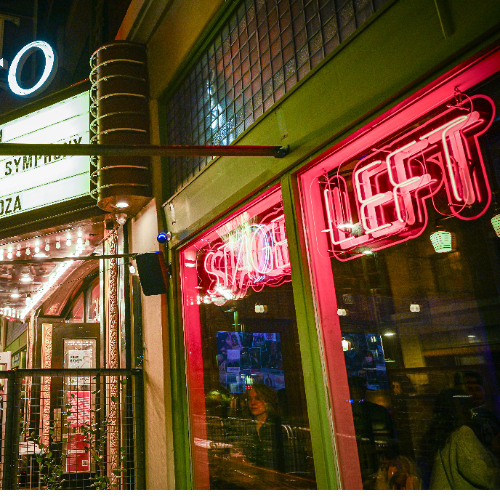
🎭 Stage Left revealed — the reimagined, music-themed bar next to the Rialto Theatre
🚪 The space glow-up — making it more open, inviting, and everyday-friendly
🍕 Full menu access — order from Homemade Pizza Kitchen right at the bar
🥚 New specials — deviled eggs with candied bacon + house-pickled jalapeños
🕓 Hours & days — open 7 days a week, 4 p.m. to 2 a.m.
🎟️ Rialto ticket perk — ticket holders get 50% off their first drink
🖼️ Wall of legends — 500+ authentic Rialto posters (many signed)
🍸 Elliott’s signature craft — 20+ house-infused vodka flavors
🌶️ The jalapeño vodka rita — the longtime fan-favorite drink
💥 Bombs vs. Bams — the neighborhood name shift with the same Tucson energy
🚋 Streetcar Cocktail concept — a shared downtown drink competition idea
🍻 Bar crawl vision — local bars doing it for the community, not out-of-town ticket sellers
🏙️ Downtown culture — bartenders, recommendations, and the walkable district vibe
Episode Description
Downtown Tucson has always had a way of reinventing itself, sometimes quietly, sometimes with a big, neon-lit wink. This episode of Life Along the Streetcar is very much the second kind.
Host Tom Heath welcomes two of the urban core’s most recognizable hospitality names—Billy Elliott (of Elliott’s on Congress) and Brenndon Scott (of John Henry’s and the newly renamed Dean’s Public House), for a conversation that’s equal parts behind-the-bar storytelling and behind-the-scenes downtown strategy. The headline: Stage Left, a reimagined, music-themed bar next to the Rialto Theatre, built with one big philosophy in mind: collaboration beats competition.
If you care about Downtown Tucson nightlife, the Fourth Avenue bar scene, and what it takes to build a thriving “stay out all night and walk everywhere” district along the streetcar line, this one’s packed.
Stage Left and the Rialto Block: A New Chapter for Downtown Tucson Nightlife
Stage Left is a deliberate reset of what that space can be. Located next to the Rialto Theatre, the spot many longtime downtown regulars knew as the Good Oak Bar is now being positioned as something more welcoming, more approachable, and more in sync with the energy of live music next door.
Brenndon and Billy explain that the shift started with Don Martin, who now owns the connected businesses (Stage Left and the pizza kitchen). With the change in ownership came a clear question: how do you make this space feel like the obvious place people want to be before a show, after a show… and even on nights when there isn’t a show?
Their answer is a familiar downtown success formula: remove the “exclusive/niche” barriers and meet people where they are. That means opening up the vibe, literally (goodbye curtains and walls), and socially (a neighborhood bar feel), with the practical upgrades people actually notice: visibility, comfort, and a sense of “oh, we can hang here.”
And yes, the name sparks debate. “Stage Left” sits to the “right” of the theatre depending on how you’re thinking about it, and the guests admit it’s already become a conversation starter. (Also: people keep getting it wrong, which honestly feels like a rite of passage for any new Tucson spot.)
Infused Vodka, Bombs vs. Bams, and the Elliott’s Origin Story
No conversation with Billy Elliott stays purely theoretical for long, because eventually, you’re going to talk about what’s in the glass.
Billy breaks down the signature claim to fame at Elliott’s on Congress: infused vodka, made in-house using all-natural ingredients and a method that’s equal parts science and hospitality craft. What started as eight flavors back in 2012 has grown into 20+ infusions, ranging from crowd favorites (strawberry, raspberry, blueberry) to “only-in-Tucson” curveballs like horseradish, bacon, peppercorn, basil, mint, and cucumber.
He explains why vodka is perfect for this: it’s neutral by design, which means it happily absorbs whatever you throw in it, berries for color and flavor, peppers for heat, herbs for complexity, without turning into syrupy sweetness. One of the most fun takeaways: the infusions look sweet (especially the pinks and purples), but the flavor stays true to vodka’s crisp bite.
Then comes the downtown legend: the jalapeño vodka rita, a margarita-style staple that’s been Elliott’s most popular drink since opening. It’s spicy, it’s approachable, and it captures the “choose your own adventure” spirit Billy describes, where guests can build a drink the way a chef builds a dish, based on ingredients and balance.
And if you’ve spent time on Fourth Avenue or downtown after dark, you’ve probably encountered the other piece of lore: the drink that changes its name depending on which side of the streetcar tracks you’re standing on. On Fourth Avenue they’re often called Bams; downtown, they’re Bombs—a splash of lemonade, a splash of Red Bull, and your choice of flavor. Same DNA, different neighborhood dialect. It’s Tucson culture in a cup.
“Rising Tide Raises All Ships”: Collaboration, Bar Crawls, and the Streetcar Cocktail Idea
The most important thread of the interview isn’t a menu item, it’s a mindset.
Billy and Brenndon both return to the idea that Downtown Tucson businesses grow faster when they grow together. They talk openly about how they don’t see other bars as competition, and how the urban core becomes a stronger destination when there are more high-quality reasons to be there. The message is simple: if downtown is thriving, everyone benefits.
That mindset is exactly why Stage Left is also a foundation for future partnership. The guests hint at multiple possibilities tied to the Rialto block and surrounding spaces, projects that are bigger than a single operator can comfortably take on alone. They describe Stage Left as “the carrot on the end of the string”: get this running smoothly and profitably, and it unlocks other pieces of the puzzle.
You also get a great “how downtown actually works” moment when they describe walking around to other bars, not to steal customers, but to connect with the community of bartenders and staff. Because in downtown Tucson, people bounce between spots, recommend each other, and build reputation together. Tom shares a personal story of an accidental “bartender-guided tour” that turned into a full day of discovering downtown through the best kind of word-of-mouth: the people behind the bar.
And then, right in the middle of it all, Tom floats a concept that feels like it should already exist: a Streetcar Cocktail.
The idea: run a friendly competition (with sponsors and prize money), pick a small set of core ingredients, and let bars along the streetcar line create their own versions. The winning recipe becomes a shared downtown staple, served in different interpretations, but with a recognizable identity. Billy and Brenndon immediately light up at the thought, and you can practically hear a future Tucson tradition taking shape in real time.
They also call out something that frustrates local operators: out-of-town companies selling “bar crawl” tickets that don’t reflect local norms (like cover charges where there aren’t any). Their alternative is refreshingly straightforward: let the bars themselves create community events, built by locals, for locals, and designed to celebrate the streetcar-connected districts without gimmicks.
What to Know Before You Go: Stage Left Details and Why This Episode Matters
If you’re the practical type, the episode delivers real-world intel:
-
Stage Left is open seven days a week, 4 p.m. to 2 a.m.
-
Food is available through Homemade Pizza Kitchen (order at the bar and it comes to you)
-
They’re adding Stage Left-specific specials, including a standout snack: deviled eggs with candied bacon and house-pickled jalapeños (priced to feel like a neighborhood bar, not a special-occasion splurge)
-
Rialto ticket holders get 50% off their first drink—a smart little bridge between live music and downtown bar culture
-
The interior is packed with authentic Rialto history: 500+ show posters, many with real signatures—turning the bar into a living scrapbook of Tucson’s music scene
But beyond the hours and specials, what makes this episode worth reading (and listening) is the bigger picture: it’s a snapshot of how the Downtown Tucson entertainment district evolves. Not through one perfect “master plan,” but through relationships, shared risk, creative reuse of space, and operators who understand that the streetcar line is a connector of communities.
In other words: this is what it looks like when people who love Tucson decide to build something new together.
Stay Curious, Tucson: Listen Now and Join the Downtown Conversation
If you’ve been looking for a reason to spend more time downtown, or you’ve been spending time downtown and wondering what’s changing next, this episode gives you the context that makes the next night out more interesting. You’ll know the names, the ideas, the why behind the rebrand, and how places like Stage Left fit into the bigger ecosystem of Fourth Avenue, Congress Street, and the streetcar corridor.
🎧 Catch this episode and the full archive at: lifealongthestreetcar.org
📱 Follow Life Along the Streetcar on Facebook: https://www.facebook.com/LifeAlongTheStreetcar
🎶 Stream on SoundCloud: https://soundcloud.com/lifealongthestreetcar
And if you’re the kind of listener who likes to help shape what happens next: keep an eye out for that Streetcar Cocktail idea. It’s the sort of community-powered tradition that feels perfectly Tucson—and it might be closer to reality than you think.
Stay curious, Tucson. 🌵
Transcript (Unedited)
Welcome back to Lifelong Street Car Podcast, where we cover all the social, economic and cultural events happening in Tucson’s urban core, from a mountain to the University of Arizona. All episodes available on life Along the Street, Car Dawg and you can catch us live on Sundays at 11 a.m. on Downtown Radio 99.1 FM, and that streams on Downtown radio.org.
And today I’m excited. I got two guests coming in here today. I try to think of a catchy name because they both begin with B, but I was like, I’m gonna forget that. I’m calling them libation leaders because apparently I’m just finding out that if you had a beverage in the downtown or Fourth Avenue area, you’ve probably been at one of their locations.
But we’ve got Brenndon Scott and Billy Elliot. Welcome in. Thanks for having us. All right, so, we have a project that you’re working on together, which I want to discuss, but, let’s start at the far end over here with Mr. Elliott. Elliot’s on. Congress has been downtown for since May of 2012. Okay, so while so you working through the incubation period as well.
So every year blows my mind. There’s a there’s a party coming up. Yeah. Yeah. Elliott has been great. I mean, it’s so much fun. I mean, we focus on the infused vodkas. You know all about it. I do, but everyone else does it. So how does someone get into infused vodka? Yeah, it’s been a staple of ours since we opened.
And, now we have over 20 flavors, so ranging from jalapeno and habanero, if you like spice. Strawberry, raspberry, blueberry are the most popular. You got unique flavors like horseradish, bacon, peppercorn, basil, mint, cucumber, lots of fun stuff. Kind of choose your own adventure as a customer. You come in and I want my Bloody Mary with garlic and jalapeno.
Okay. Xyzzy. Yeah, you go crazy. And then you create cocktails. Then kind of like a chef would look at all your ingredients. Well, I’ve got some, habanero and some basil. Make it a little spicy cocktail. Absolutely. Yeah. I mean, the jalapeno vodka Rita has been our most popular drink since we opened. It’s kind of like a margarita, but with jalapeno vodka and the world famous Bams.
Oh, yeah. Yeah. So we call it an Elliott’s bomb. You know, it’s something that originated, over 20 years ago at bison, which is we were doing these, you know, and they call them Bams. So on Fourth Avenue, they call em bands. Downtown. We call em bombs. It’s just this thing that you find them all over town, but it’s a splash, lemonade splash of Red bull with your favorite flavor.
So, you know, strawberry, raspberry, blueberry, like I said, are the most popular kind of serve it like a mind racer over ice with a straw, and you slam it and it’s great. Fantastic. Yeah. Can’t go wrong. It’s nice, for a nice casual evening out. Yeah, yeah, exactly. What a start. But how did how do you get into infused vodka?
Was this just something he’s like, oh, I want to put things in vodka or is this like, yeah, where’s it come from? Yeah, absolutely. There’s a lot of restaurants that have 1 or 2 flavors, and you see a big jar on the shelf. You say, oh, what’s that? You know. Oh, well, we got these for Bloody Mary, you know, peppercorns and Halloween years and whatnot.
And so you see that around town. And we just decided we open up. Let’s exploit this. So when we first opened in 2012, we only had eight flavors. And then it grew and grew and grew. And then you tried some that didn’t stick, so most of them did. The fact of the matter is that vodka being a neutral spirit, it just takes to whatever flavor you put it.
It’s so good for mixing. I mean, the word vodka comes from vodka means water in Russian. It’s supposed to be odorless, flavorless, tasteless. That’s the goal when you make vodka. So it takes to whatever you mix with it, whatever you put in it. So we just throw all natural ingredients. You know, jalapenos would pour out the seeds, throw them in there, let it sit, strain them out through a coffee filter so you’re not getting a chunk of jalapeno in your drink.
And the flavor sticks, you know, with the berries. Same thing. Fresh strawberries, raspberries, blueberries. Put them in there, strain them out and it takes to the color the blueberry is like this deep purple. It’s delicious. You know, it’s amazing. And they’re not overly sweet. So that’s the funny thing. I’ll order somebody a shot of strawberry vodka. It looks the drinking.
Oh, it’s like pink and red. It’s going to be sweet. No it’s not. It’s still straight vodka, but it’s got that strawberry flavor, you know. So they’re not, you know, heavy on the sugar. They’re true to the vodka and the flavor. And then with the jalapeno, like I said, we call out the seed. So it’s more on the mild side.
People came in, we first over and said, well, that’s not hot enough. So we said, okay, okay, we’re going to accept it. Habanero we just give it a rough chop and we leave the seeds in there, leave the membrane in. And that is hot. That is. Yeah. Nice. Bring your pants off. Yeah. As it did yours. So, Brennan, you’ve got you’ve got a few different, concepts, like where do we start?
What’s been open the longest? So I started with the territorial, but I sold that. That was 2007. I had the band at the Bambi box yard. Those have all been sold. Currently we have, John Henry’s on track side. And then, Billy and I are in this new one stage left next to the Rialto downtown.
That is exciting for us. So you guys come from these different backgrounds? What? How do you know each other? How did you get together to work on stage? Left? I mean, we’ve become a lot closer since October. I’ll say. You know, we knew each other in passing. So many mutual friends, you know, he’d come and Elliott’s. I’d stop by.
John Henry’s I. You know, I knew him back when he opened the box yard. So we’ve known each other for years, but just kind of, you know, see each other once every couple of months, have a drink together. Now all of a sudden, we’re just like, so aligned in the way we look at this industry. And we kind of have this idea of, you know, rising tide raises all ships, right?
I mean, he said that when we first started and I fully agree, I want downtown to be the destination, you know, so I don’t look at any of these businesses as a competition. I think the more we have going in the right direction, the better it is. As, as you know about downtown, right? Yeah. I remember I was interviewing, Chris Squires from 1055, and there are a lot of, craft beers coming out at the time.
And, and I said, a, is it too much? And he said, there’s never too many if they’re good, like, if it’s good, it brings people in. If they’re not there’s not good then yeah, it’s it’s bad. But if you you can bring in quality and there’s always room at the top for that. But how did you then, how did this concept come up.
You just having a drink and say, hey, let’s open a bar together? Well, Don Martin, I’ll say is, is a hell of a character. And he, you know, there was a change of ownership that just happened. So. So talk about the location. That was the Good Oak Bar. It was a good oak bar right next to the Rialto.
And it’s connected behind this pizza kitchen. And so it’s all on one liquor license, basically one business, one lease. And so with the change of ownership, Don Martin now owning it, he looked at Good Oak and said, it needs to be more inviting. We need a rebrand. And that’s why I say we were kind of like minded.
We both came to him in different conversations, said, yeah, we need to open it up. We need to get rid these curtains. We need to tear down this wall. We need to make it more inviting. We need TVs. You know, we got you have a sports on, you know, make it inviting. Make it music themed. We’re right next to the Rialto.
Make it the prices more. Comfortable right here. And, meet the customers where they’re at. Get some recognizable brands that they’re all familiar with. Before it was a little more, it was a bit out of reach for the common drinker. It was. It was awesome. They did great things, but it was a very exclusive kind of niche.
Right. And so. So you both go to Don separately. And Don came to us separately, and we found out through a little conversation amongst ourselves that we were having the same conversation. So why not team up nice. Yeah, we’ve got obviously other stuff going on. So it’s kind of nice not to have the full commitment alone. So this teamwork turned out to be pretty.
And we have a third partner, Anthony. Perhaps we got to mention who’s pretty great also would bring in, this little, tripod all together. And Anthony couldn’t join us because he is gallivanting across New Orleans. Yeah, exactly. But you’re saying his background is in, he goes all the way back to the New York culinary scene. So he’s absolutely a lot of experience.
Restaurants and bars in New York City and then through the liquor industry, I mean, he’s been with distributors, he’s been with suppliers, he’s currently working with Sovereign Brands. So Bambu rum, which is incredible. I mean, he he brings a lot to the table. And, he’s just more kind of on trend, if you will. And his last name is perhaps the beer brand.
They sold it. His family back in what, 60s his connection? Yeah. He’s gone before. They blew the past. Really? Okay. Yeah. If they still had it, we’d be having this conversation on a little private island somewhere. Then, you know, this these, these evolutions are always surprising. Not surprising, I guess they they intrigue me because territorial even.
You’ve been doing stuff in downtown since two or in this area since 2007, but, I think Lindy’s. I had Lindy’s, we bought that in 2006. So. Yeah, that was the beginning of Fourth Avenue. Yeah. And then you’ve been 2012 23rd since 2012. And before that I was bartending basically just for eight years from 2003 to 2.
That was good. My next question is like, what got you into the ownership? So you were at bison, which is serving those tiny sandwiches. Yeah, exactly. Exactly. That’s what they’re known for, being small, right? Yeah, exactly. Yeah. Big sandwiches. And like we said, the bombs, you know, that’s hams. The bands, the bands, they’ve evolved as well. But, so typically you took all of their, intellectual property and then you would cross the street and open up and we’ll call it bombs.
Every bartender has a different story of how it started. Right? You know, everybody’s like, no, I created that. But anyway, no, we had so much fun to buy sandwiches and, I just at some point, if you bartend long enough, you want to do it for yourself, right? And so when the opportunity came along downtown 2012, downtown looked a lot different where that opportunity look like, because it was not like.
So the building that Elliott was in was a stake in the neighborhood, and they lasted less than two years and they closed. And when I dealt with the landlord, he just wanted somebody that could pay the rent. And so it wasn’t exactly a turnkey operation, but it was pretty ready to go. I didn’t have to do any construction.
It wasn’t a huge investment. So I had a really nice opportunity. And like I said, downtown that was during the construction of the streetcar. So the first five months we were open, we did not have a street in front of us. It was dirt and construction, but you had a nice chain link fence or something. We did have a chain link fence.
That’s right. Yes. And you didn’t want to go outside and breathe in the air, right. Anyway, so that 2012 was very challenging, but my wife and I just jumped in and said, hey, we have confidence ourselves. We want to try this and Fuze Vodka concept. We want to have some fun food to go with it. Here we are, 13.5 years later.
Still doing it in 2006 gets you started. But what what was your background before that? Were you in food service or seems like your your path has been more entrepreneurial, like opening, creating, selling, moving on. Yeah. I was a bartender, throughout college. So, O’Malley’s was the last one. I was on, Fourth Avenue and then graduated, and I got into, mortgages actually at first.
But then, commercial real estate was my primary, so, I was, partnered with a local company who, dissolved in 2007, 2008, the financial crisis. And it left me with these investments that I had, which were a few bars and restaurants. I still do development were actually redeveloping, 72 East Congress. We’re doing the Indian trading Post.
Okay. A couple other little things. That one’s a cool one. We got, corners past. I was going to say that’s the past. Yeah, yeah. So that’s that’s exciting. We’re trying to get them, hopefully moved in this year and open it. Just a little side note, I think I am responsible for that because I had a past for the first time in Phoenix, with a friend of mine.
I was like, these are fantastic. I wish there was one in Tucson. And then like three days later in the paper, they’re like, hey, the trading post is being turned into corner. Thank you. So I need to know where I pay the commission. So now you are welcome. Welcome. I brought it into the universe. So you but all these concepts, though, that, you’ve talked about, box art, I didn’t realize that you’d sold that, but I mean, that that was such a creative design for for that space at the time.
I had one to work with, traveling overseas. You see a lot of containers. You see they also repurpose differently than they, they have different lives than they usually do in the United States anyways. And since we had that concept, I think I was running with that concept since, like early 2000, you see a lot more uses of them here in the States.
But they’re still, I think, under utilized. I thought it was just be a fun project. So we. Yeah, we got that property, and I, invited a partner in who owns a, DMI contracting. It’s to design modular. So he and I built that whole thing through. His is, his company is that I think one of my we we I mentioned if we’re on the air, we actually interviewed someone at Box Yard back in 2019.
It’s fairly new concept at the time. Yeah. I think we opened, late, I don’t know, 17 or 18. Yeah, yeah. So we in talking, I think one of the things that I enjoy and I might have this completely wrong because I don’t do any research, but there was a lot that had, a food truck on it for the longest time.
And that food truck became the first tenant of of box Yard, if I remember correctly. It’s like you were displacing anyone. You just sort of built around them and said, welcome in. I thought that was such a fabulous story. Yeah. So the story behind that is I had that land for such a long time, and I’m just paying on it month after month.
So new learn the, Vietnamese food truck came through and they were just kind of off set in a few hundred dollars worth of my, you know, taxes and whatnot that I had to pay into that place on a monthly basis until we got it going. But yes, they were and still are a tenant. There, and it’s just fabulous.
You talk so many times of economic development and displacement and and I always point back to that story is there’s a way that you can incorporate that, right? You don’t have to push someone off. You create something and then they can be a part of it. And I’m sure that 100% and they they’ve been a lot more successful because of it too.
Yeah. And the idea behind it ultimately is, this is an incubator space for something bigger. You know, they go brick and mortar on their own afterwards. So they actually are or were in the process. I haven’t talked to them a little bit since I sold, but it looks like these guys are moving on. Good. Yeah. Bigger and better things out there.
Incubators. We’re we’re lucky here in Tucson. I’ve got a few, Bill and I really got to know each other through the proper shops. That was an incubator for us at the Tucson Gallery, and we wouldn’t be where we are if we didn’t have that opportunity to to figure it out. We’re not, like, really just taking the leap to.
I’ll do it like, like a little more baby steps. And then, before we get back to stage left, we’re talking also you have you have track side, which is, on Fourth Avenue. That’s the old, the Coronado Hotel. Exactly. Here. Corner fourth and ninth, changing the name to deans public house in the next month or so.
Dean is the manager over there. He’s been doing a great job. And, may I just say another breaking news story here on the streetcar? You heard it here first. That it was brilliant. Also, the way he did it, he approached us at our, holiday party, and he came with a sweatshirt that had his new logo on it, which is a wolf in sheep’s clothing, which I think is brilliant.
And, says Dean’s public house, and he says, you know, it’s time to, to change the name and take over a different identity because we bought it as trackside, and we’ve always wanted to do something different. So he presented it. He, he did all the work going into, the new logo. So it was just the right time.
I had enough cocktails in me that night. Also to say it’s an easy. Yes. So, he’s in the transition of, of rebranding and and, yeah. So hopefully by, it’ll be up and running before the NCAA tournament, right as Dean’s. Okay, still up and running as it is currently. Yeah, but we’re doing some new furniture.
Some new TV is, you know, just some small stuff to to kind of give it a different identity. One thing that seems fairly common among and maybe this is just the, the locations. But your businesses, they’re, they’re, they’re smaller footprints. But you pack a lot into each one of them. Right. They’re not like you with your patio. You just you expenditure patio.
Yeah. Actually had Elliott said something we’ve been working on a long time. During Covid, everybody got kind of the freedom to do, an expansion of sorts. And that was very temporary set up. I built the fences myself for that, so I knew that wasn’t going to last forever. So we had that for three years, but over the last two years, I’ve been working with the city.
And, you know, that’s a process. You have to jump through some hoops, get a there’s frustrations with that. And, but man, I can’t say enough about, Chris Smith, who owns is he does do all the metal work. Smitty built co as his company and he built the most beautiful, designed fence for our expanded patio. It’s a street tree style, which means it’s out in the parking space, in front of Elliott.
So we’ve got. Yeah, expanded space out there, you know, pet friendly. Go out there and smoke, have a beer and a smoke and enjoy the nice weather. I mean, especially this time of year. Do you still have the patio right outside the door, too? Yeah, we’ve got the small patio that we’ve always had, but that’s only room for like really one table.
This expanded patio has six more tables, so it’s a huge upgrade for us. This looks like the space where Elliott’s is, where John Henry’s, trackside. These are all like smaller places that, But when you go in, there’s the it’s the outdoor space. And it’s been really utilized, especially at that. Dean’s public house. That patio is fabulous, too.
We’re so excited about that patio. Yeah. Box or box yard kind of showed us the, the secret sauce. That people want to be outside more than I expected them to be, you know? So, yeah, 300 days a year, we’ve got, got a great spot for them to sit. Yeah. And now. So then join me back to the partnership.
You guys are having these conversations with Don. Have a cocktail at some point, like, hey, wait a minute. You’re you’re working on what project? Yeah, well, it was funny. We had a conversation. I think we sat down at Elliott’s for about an hour and a half, and, we were both hesitant, but we kind of convince each other that, you know, because when you take the because this is the first time we’re working for or with somebody else as opposed to for sales, right?
That’s as the same as having no partners and nobody to answer to. Like at Elliott’s. I’ve met your wife. Yeah, yeah. So the answer correct. But you know what I mean. It’s like when you own it, you kind of just feel this freedom, this creative freedom of, I want to run this special. I want to do this. We’re going to do this works.
We’re going to do $1 drinks tonight because it anyway. Oh, sorry. I wasn’t supposed to curse. Anyway, you know, you have the creative freedom as an owner. Whereas when you’ve got partners and a boss to, you know, or an owner above you, we’re headed in that sense. But we kind of convince each other like, man, this guy Don is great.
He’s got his. The vision aligns with what we would do here. We want to work with him. And I. I don’t think of him as a boss. I keep using the word partners. We’re partners 100%. We are partners. And the, this we did this also because stage left is the carrot on the end of the string. If we get this one kind of, profitable, and then we’re doing pretty good so far.
There’s a lot of other things that follow. There’s the Don martini club upstairs, which we are looking at commercializing. There’s the patio outside, which we are doing a temporary lease for March, April, May on and just see if we can monetize that. The old scrap is building in back partnership with the Rialto, that whole block and come together in this way that creates, a lot of cool new, thanks for the, the community.
It’s it’s interesting, looking at what the team at High Wire did by pulling all of those events around. Around that patio. I was thinking, you know, because I have zero experience in this, that that would make sense for their scrappiness activated. You know, that parking lot maybe gets. Anyway, talking about making that parking lot a little kind of, park system, but, yeah.
And, yeah, there’s some other things we probably can’t talk too much about, but, Yeah. Oh, sure. Yeah. There’s always help. Yeah. This. Yes. This is just from I from if we if we sign contracts, we can talk about it more in detail. But, hopefully there’s a way that all the businesses interact together. And are these things that you see the two of yourselves partnering on, like.
Yes. So this stage left is it’s not just for the the Foundation for business Foundation, for this partnership to correct. And that’s part of the reason why we decided to work with somebody else and each other, just because there’s so much there that we couldn’t do individually. Yeah, I think when you look at some of the bigger things in downtown, there’s different partners involved with it.
You know, this group has, their, their set of interests in this group has their set of interest and together they’ve created, you know, hotels and things of that nature when it’s kind of hard to go into that by yourself. Absolutely. But that courtyard, just a get back to that. I mean, so much potential in that courtyard, it’s kind of hidden.
It’s been underutilized for years, as you know, being that the proper shops for so long, it’s it’s such a cool space. What we could do with that, we’re going to do this trial period that he said for a few months and try to run some events, some small, some big, and see what see what its potential is, you know, so and we only have like five events.
This is like last week, but much a lot of contest is is coming up. We’re going to bring 12 bars together. Nice. We have a couple of DJ sets. We’ve talked to some bands and that kind of stuff. I don’t know where I was really going with this. If you guys have any options, I have an idea for you.
And this is something that’s set in my mind for a while. When you go to some of these, cities, every bar serves a version of a certain cocktail. I think we should have some kind of cocktail named after the street car, that you have a competition, and everyone on the street car out can participate. Oh, I can find some sponsors to put up with, like, some prize money.
And then at the end of the day, whatever that winning recipe is that each bar agrees to serve some version of that in their bar, they don’t have to serve it exactly like this. But if the ingredients are these three things, then you have to figure out how to incorporate those three things for your version of the street car.
And you love it. Did we just get a new event? Yeah. Pick a date between, you know, March 1st and May 30th and that’s yours. I was thinking mid-July. That seems to do it. Yeah. All right, well, we’ll talk about that, but I haven’t I? I always thought that would be a fun idea. So that you can, you know, go down and see, you know, taste each other’s version of that, like, you know, New Orleans everyone has there.
Anyway, I like that. I think it’s brilliant. It would bring everybody. I mean, everybody kind of wants to have a community shared experience, I mean, especially all the bartenders at bars and whatnot. So yeah, that would be kind of a I think it’s it’s the two of you all, most of the bars that’s in Fourth Avenue now.
Yeah. Well, you know, like I said, rising tide raises all ships. Right? Everybody along the streetcar should be aligned in wanting us all to do. Well, we’ve talked about doing a bar crawl. Where? Yeah, of course we would include the bars that we own, but we want to invite every other bar and say, hey, sometimes a company that based out of Texas runs a bar crawl, and they try to sell tickets, that they’re charging a cover charge to a bar that doesn’t charge a cover, right?
Right. They’re trying to make money from it, you know, 400 miles away. This is crazy. Like, why don’t the bars that own the bars get together and do a, you know, a community along the street car, you know, nobody’s driving. You go up and down. I mean, we did a walking tour early December to try to, pump up this holiday party that we were throwing at stage left, and we had a blast.
Yeah, we hit ten different spots, and we were kind of handing out fliers and like, hey, we’re here. We’re stage left. Like, come check us out. You know, a good industry bar. And we weren’t trying to steal customers. We’re going to the bartenders themselves, the staff and saying, hey, this is a good spot. You know, when you get off work, where do you go?
This is another good option. The best experience I’ve had in downtown this was years ago is a complete accident. I won’t get into the whole story, but, meeting two friends for a mariachi at, at high Art. I think it’s playground or whichever one I’m aware. As we’re meeting for mariachi, both of us had appointments, that got canceled.
So there’s three of us sitting there like. Oh, and we just decided to go try a spot, and we went and they weren’t open yet. It was the Tough Luck club. It was closed. And so they said, oh, you should go over to 47. That’s how long. So you go to 47 Scott, because they’ve got good cocktails on 47 Scott and we told the, the the server what we were doing and he had just made it.
They hadn’t made us cocktails. And then he’s like, oh, if you like this, you should go over to Panca, because Brian used to work here and he’s over there. So I went to Panca and then we got done. We said, Brian, where do we go next? And we spent the entire day just going on bartender suggestion from restaurant to restaurant and, it wasn’t stressed out the the entire day.
So it wasn’t like we got, you know, incredibly overserved or anything. It was a nice day, but it was a chance to explore all these different areas and get the insight from the bartender, because every bartender that I’ve met now, I realize, has worked at four other places. Absolutely. It’s a shared community downtown, for sure, and they know each other and and they, they know anyway.
So this idea of of moving people through an area, because you experience more than just the drinks, you get to see the art, you get to see the the commerce, you get to see all of these, these elements and downtown to some partnership. Now I was working with Main Gate Real to earn I mean a Rialto, but the Mercato and fourth Avenue to create more of a district feel like if you like, on the outside of the Chicago store, you see that that banner that’s up there and it says, what’s happening on Fourth Avenue?
What’s happening? And Main Gate is they’re trying to get people to what you just said. It’s all connected through that, that rail line. Yeah. Which is the streetcar. And we’re life along the streetcar and loading this since 2017. And now apparently we’re going to be sponsoring a cocktail contest. This is great. And I can’t wait to have the streetcar on the menu.
Right. What you just explain, though, is such fun market research. I mean, what a neat, space that we all get to occupy to go and learn about our individual businesses by going and drinking at different bars. I mean, as long as, you know, we don’t get it, as long as you don’t have a problem with alcohol.
What a great opportunity that as I think. Yeah. And again, there’s I think some of the experiences would be fun just to be a part of the group, even if it’s not, something, you know, something that you want to partake in the alcohol. There’s. Well, I get off my soapbox about how wonderful downtown fourth Avenue main get, how these areas are for walking and the artistic community and everything else are just are just absolutely fabulous.
Yeah. So stage left is open, ready for business. And it’s called stage. I was talking to someone and they’re like, I don’t know why they call it stage left because it’s on the right of the theater stage left. It’s it’s beautiful. Yeah, it makes a good conversation point. Right. And it’s funny too, because somehow it made sense to me.
And then nobody gets the name right. I’ve heard Stagecoach. Right stage. What’s that place? You know, some people still call shot time, right? They, Anyway, yeah. It’s open seven days a week, 4 p.m. to 2 a.m.. Just a good, comfortable neighborhood bar food. So you get a full menu, availability from Homemade Pizza Kitchen. Okay.
So you can order it right at the bar, and they’ll bring it right over. Okay. Also to do some specific. Yeah, yeah. We’re starting, new specials too. I’m is Gabe and Vivian are great. And they’re creating some, some products that they don’t normally serve that they’re doing just for our menu at stage less. So we just rolled out some, deviled eggs just yesterday, actually.
And they’re incredible. They’re delicious. And it’s only five bucks. You get four deviled eggs with some candied bacon, pickled housemade pickled. Hell, Panos Gabe knocked out of the park on this one. And and we wanted the price point to match kind of our customer base and our drink prices. I mean, you can get a shot. A shot of beer for six bucks.
We got $5 shot specials all the time. Really reasonable prices, honestly. And you’re only open days that the Rialto has a show. Yeah, it feels like that sometimes. You know, it’s, you know, in they’re early going, it’s hard to let people know we’re there. And it’s amazing how much the foot traffic is different on one block compared to another.
But no, we’re open seven days a week. Obviously perfect. In fact, if you have a, ticket to the show, it’s Rialto. You get 50% off your first drink. Oh, yeah. Come in before the show to Rialto. Sure. You take it 50% off our already crazy cheap prices. Cheap is around reasonable prices. Affordable? Yes. Right. But,
No, it’s. I mean, we’ve created something cool. It’s it’s really fun. The artwork in there, it’s cool. Rialto provided us over 500 posters from their shows. It wasn’t just like wallpaper, you know, I went with the original authentic, signatures on them also. Yeah, yeah. Wow. I went in and I saw some of those. Those are 500. Yeah.
It’s incredible how much it takes to fill up that much wall space, but just that’s the amount of research I did. I went and had a blast, but that was the extent of it. Perfect. Well, I appreciate the both of you. I know you’re really busy taking the time. I it’s been great to get to know you a little bit better.
And I appreciate what you’re doing for our urban area because it’s it’s not just about bars. It really is about community and culture. And you’re kind of bringing those things out, through the works that you’re doing. So I do appreciate that. Thank you. That’s nice. I love that get you back. And, or as we celebrate, maybe we’ll bring you on with the winner of the streetcar, cocktail.
Yeah, we shared that. This is going to happen. We have some fun events coming up, so that would be great. All right, well, my name is Tom Heath. I am your host for life on a streetcar. We don’t make this happen without our executive producer, James Portis, who makes sure all of this actually comes together. We appreciate, Ryan Hood for allowing us to use their music to open and close our show each and every episode we’ve done since 2017.
And, we appreciate your time. Tune in every Sunday for another episode of life on the streetcar. And until the next time, stay curious to some.