
High Rise Impact: Redondo Tower Drives Downtown Development with Louis Parrish
Episode Highlights
- Downtown Development Through Ownership
Tom and Louis dig into why ownership downtown matters more than ever—how condo projects like Redondo Tower can turn short-term renters into long-term stakeholders who invest in the neighborhood, support local businesses, and help shape the future of Tucson’s urban core. - Redondo Tower’s Full-Circle Story
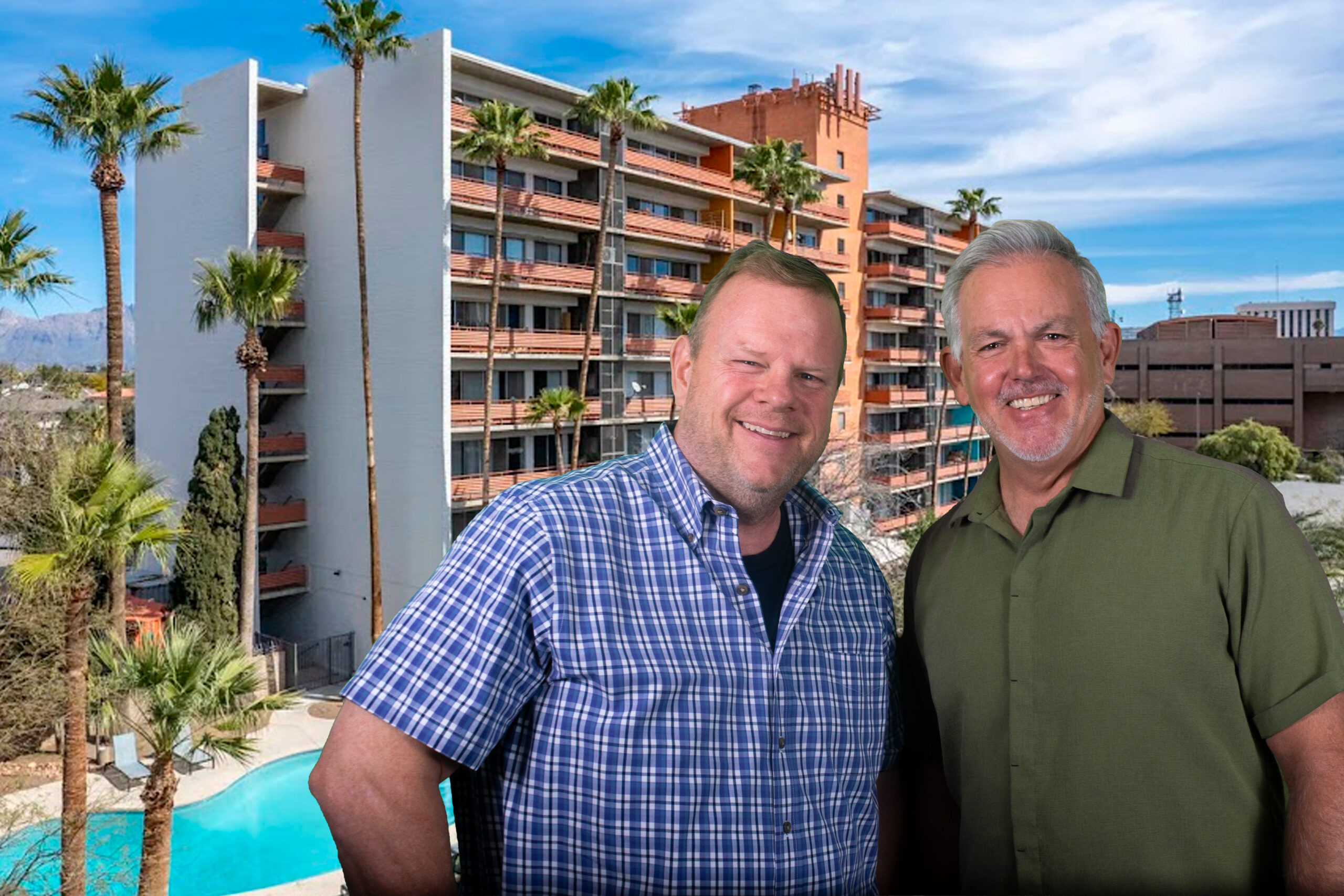
Redondo Tower started life in the early 1960s as a condominium project, shifted into decades as apartments, and is now returning to its original vision as a high-rise condo community. Louis shares how this unique history makes the building perfectly positioned to offer real ownership opportunities in a part of town that’s been mostly rentals. - Real Numbers, Real Access
Louis breaks down how Redondo Tower is designed to be attainable: studios starting around the mid-$100,000s and a range of one- and two-bedroom options, with some scenarios where owning can be more affordable than renting downtown. Tom and Louis also unpack condo financing, including creative lending approaches intended to make purchases possible for more would-be downtown homeowners. - Density, the Streetcar, and a Connected Lifestyle
The conversation explores how adding more full-time residents along the Sun Link Streetcar line strengthens local businesses, boosts transit use, and supports a more walkable, vibrant city. Redondo Tower is framed as a model for living the “park once, ride often” lifestyle in the heart of Tucson. - Art, Identity, and the Palo Verde Bloom Connection
Beyond bricks and mortar, Louis talks about a vision for a large-scale mural on Redondo Tower’s east wall, in collaboration with muralist Ignacio Garcia and partners like the Southern Arizona Hispanic Chamber and the Palo Verde Bloom Festival. The goal: turn the high-rise into a bold visual landmark that celebrates Tucson’s culture and creativity. - A Vision for Downtown Tucson’s Future
Throughout the episode, Tom and Louis return to a core idea: when people can own homes downtown—at approachable price points, in a connected location, with culture and community built in—it creates a healthier, more resilient city. Redondo Tower is presented not just as a project, but as a test case for how downtown Tucson can grow in a way that feels both economically strong and deeply human.
Episode Description
Downtown Tucson is evolving from a place you visit for an evening out into a place you truly call home. In this episode of Life Along The Streetcar, host Tom Heath talks with Louis Parrish of United Real Estate Specialists about what that shift really means for our city. Louis shares his deep Tucson roots and decades of real estate experience to frame a bigger conversation: when people own homes downtown instead of just renting them, it changes the way they invest in their neighborhood, support local businesses, and imagine Tucson’s future. This episode looks at downtown through the lens of economic and community development, not just buildings and prices.
Redondo Tower and the Power of Ownership
At the center of the conversation is Redondo Tower, a mid-century high-rise that’s coming full circle. Originally platted as condominiums in the 1960s, it spent years as an apartment building before being reimagined once again as a condo project. Louis walks us through why that matters: offering attainable ownership opportunities downtown can help build long-term stability, attract residents who want to put down roots, and support a thriving street-level economy. He also demystifies some of the financing challenges around condos and explains how creative approaches are opening doors for more people to buy, not just rent, in the heart of the city. Redondo Tower becomes a real-world example of how thoughtful development can drive both economic growth and community strength along the streetcar line.
Living the Connected Life in Downtown Tucson
This episode invites listeners to picture what it feels like to live a truly connected life in Downtown Tucson—stepping out of your home and onto the Sun Link Streetcar, walking to local shops and restaurants, and becoming part of a growing community of downtown residents. Redondo Tower isn’t just another project; it’s a signal that more people will be able to live where they work, play, and participate in shaping Tucson’s urban core. If you’re curious about downtown homeownership, interested in the future of our city, or simply drawn to the energy along the streetcar, this conversation offers a grounded, hopeful look at what’s possible. To explore the building at the center of this story, visit https://redondocondotucson.com/, and take the next step in learning more about living the connected life in Downtown Tucson.
Transcript (Unedited)
Tom Heath: So we’re changing gears a little bit today. We’ve been talking a lot about history, art and culture, and we’ve kind of been ignoring the economic development part of our show, which is an important piece. And so we’ve invited Louis Harrison from United Realty Specialist to talk about a really interesting project in downtown that involves condos. And, you know, many of, you know, my primary business is in the mortgage side of things. So real estate is something I’m very passionate about. And one thing we have not seen a lot in downtown is affordable homeownership opportunities. And I thought this is a perfect chance to really explore that and what it means in a community to have density as well as affordability. So I’d like to welcome in Mr. Louis Parish.
Louis Parrish: Thank you. Tom, I’m really, really excited to be here and honored and.
Tom Heath: Honored.
Louis Parrish: I am I’m really grateful for what you’re you’re doing for our city and our community. You get your fingers in so many different things. You’re doing a great job.
Tom Heath: Well, I.
Louis Parrish: Appreciate.
Tom Heath: You, I appreciate that. And, um, you know, for years I’ve just said I’m, I’m pretty much the, the cheerleader for those of you doing all the work. But before we get into your project, I need to know a little bit about you, because if I remember correctly, because I do a lot of extensive research for this show. You’ve been in real estate for about four to six months now.
Louis Parrish: Yeah.
Tom Heath: Yeah, give or take.
Louis Parrish: Yeah. Yeah. Actually, the last October was thirty years. Thirty years? Yeah. I was twelve when.
Tom Heath: All in Tucson.
Louis Parrish: Yeah.
Tom Heath: Man. What what, uh, what what what were you doing before? Real estate? Do you remember?
Louis Parrish: Yeah. You know, I’ve just always been a worker, and, um, my family had a building and development business. I started in nineteen sixty, and growing up, I always thought that that was going to be my path. Uh, but, um, God had a different idea. There was a flood in nineteen eighty three. that washed my family’s business down the river, literally.
Tom Heath: Oh my gosh, were you one of the photos in the newspaper?
Louis Parrish: Yeah, I was it was ridiculous. The people were going down it down the river and kayaks and yeah, people on the north side of the shore were cheering as giant chunks of land fell into the river. But, um, anyway, that wasn’t in my cards, okay. Right. So, um, I just I had a lot of jobs, man. I worked two or three jobs at a time. We had a young family that was growing like crazy, and I married a gal that was in the real estate business. Her family was. And they talked me into getting my real estate license in nineteen ninety five. And, um, I never went back. I mean, that’s really my first career.
Tom Heath: thirty years later. Yeah. Did you go back to and say, okay, I think it’s going to work? I think it’s going to work. I think it’s going to work out.
Louis Parrish: Yeah. There’s been ups and downs for sure.
Tom Heath: And you, you own United, uh, real estate specialist or you, you’re the What’s your role with them?
Louis Parrish: Uh, my wife Christina and I own United Real Estate Specialists. It’s a brokerage. Okay. And I am the designated broker there, so I have supervisory duties. Um, but I have lots of help. Sure. Greg Curtis and Suzanne Rothman are managing brokers, so they do all the file review and keep us safe. And, um, my main job is to create opportunities for the agents that are licensed with us and, um, help them build their business. And I sell a little real estate.
Tom Heath: Every now and then.
Louis Parrish: Every now and then. Yeah, I enjoy doing that. It keeps my my sword sharp and and my thumb on the business.
Tom Heath: Well, obviously, you and I have crossed paths for ten years at this point, I think, back and forth in this industry. So. Yeah. Um, you know, your name is is well recognized in this community for the good reasons. For the good reasons. Uh, so I was excited when I saw, uh, your, your company’s name go up, uh, next to, uh, the, um, the apartments of Redondo Tower with the sign that said condos coming soon. And I was like, oh my gosh. Because first of all, I think we have to set a little bit of groundwork. And I’m not sure if you have the background on this or if I do, but one of us does. We don’t have condos in downtown. We’ve got like passing right little. We don’t have projects. We don’t have.
Louis Parrish: Much housing downtown.
Tom Heath: Yeah, that’s.
Louis Parrish: True for for ownership at all.
Tom Heath: But when people see a lot of these buildings going up, they’re thinking, oh, there’s a lot of condos going into downtown. But their apartments, which very briefly, the difference between an apartment and a condo. Briefly.
Louis Parrish: Briefly, yes. Uh, well, you own a condo. It’s like you have a piece of real estate that you’re responsible for, and it gains equity. And you can paint the walls the way you want. And, um, if you’re an apartment dweller, it’s, you know, you’re paying one hundred percent interest rate when you’re leasing, and they serve a purpose. And we’ve got some great apartments downtown.
Tom Heath: Yeah we do. And I know there’s I’ve talked to many of the the building managers and such and, and they’re a lot of times they’re transitionals people are kind of dipping their toe into downtown to see if this is the lifestyle that they want, and they don’t want to make a larger commitment. So they might be there for a year or two to get a sense and then decide, hey, it is or is not for me. So definitely, definitely serves a role. But the thing that I’ve been sort of advocating for probably ten years at this point is that it also doesn’t create some of the permanency of residency in downtown. So you have people that are coming and going more, more frequently, which doesn’t always create the most solid community engagement.
Louis Parrish: Right. Well, you know, it might be convenient to live in a, in an apartment and it might be, um, economical for the short term, but as, as a renter, you you just don’t have the same stake in your community. Um, you can get up and leave if you don’t like it.
Tom Heath: Sure.
Louis Parrish: So what we’ve been taught and what we’ve observed.
Tom Heath: In in general terms, because, of course, we know that there are some people that are committed to this community that are.
Louis Parrish: Yeah, absolutely.
Tom Heath: But just in general terms, and I agree with you a hundred percent with that.
Louis Parrish: Well, and I know you’ve you’ve heard the same studies that I have over the years about the benefits of, of home ownership in a community. Absolutely. You see crime rates go down, you see education go up, the streets, get cleaner. Um, you know.
Tom Heath: Yeah.
Louis Parrish: The undeniable pride of ownership is is a real thing.
Tom Heath: Yeah. Understood?
Louis Parrish: Yeah.
Tom Heath: Understood. Then, you know, for again, I don’t want to get too deep into the woods on this one for, uh, for for our conversation today. But I know in doing a lot of research, there’s additional risks associated with the owner of a condo building versus that of an apartment building. There’s a there’s higher levels of insurance requirements, there’s longer liability commitments and things of that nature, which makes it a little bit more expensive, maybe significantly more expensive, when you’re building something to take it as a condominium project versus a rental project. And I think that’s been a consideration for a lot of the developers as well.
Louis Parrish: Yeah, I’ve talked to them. And, um, unless they’re in one hundred percent control, they’re not they’re not interested in in getting them started. Although we know Jerry Dixon’s got a couple that are plotted and approved and one of them’s funded over.
Tom Heath: On the on the west side.
Louis Parrish: Yeah, at the Mercado. That’s going to be luxury, though. Yeah. Those are really nice.
Tom Heath: Yeah. That that I’ve seen I’ve heard rumblings. I haven’t seen any the renderings, but I was talking to you and I understand that they are going to be very nice, but that will come with a cost which doesn’t sort of fall into the affordable category. So then we’ve got Redondo Tower, which has been in downtown for fifty years at this point, I think.
Louis Parrish: Yeah, maybe. Yeah. Sixty, sixty one.
Tom Heath: Yeah. Sixty years. Yeah. It’s been it’s been an icon really, because it’s it’s that tall building on the west side of downtown. You can’t really miss it, right?
Louis Parrish: Yeah, it’s iconic architecture. Yeah, and it’s got that little wave of a. Is it a porte cochere? Is that what you call those entry?
Tom Heath: Yeah, the entry way. That’s my favorite part because you go down a little bit of a hill and then there’s the wave over it. And then you sort of like you park and I feel like I feel like I’m getting at like at, like at a nineteen fifties, uh, like a casino or something. It just really has that, that flair to it. Yeah. Um, but we, we have, uh, recently found out through you and then the, the new owners of the building that they made a decision to take it from where it had been as a rental properties and convert that project into condominiums.
Louis Parrish: Right. Well, what is really fascinating about Redondo Tower is that it was originally built and platted as condominiums. So we didn’t have to go through the same development process that, you know, back in two thousand and six and seven, there were a lot of condo conversions that basically started as as apartments, and then they replatted them and went through all the rigmarole to get them there. But this, this one was already on paper as a condominium project, although it had been operating as an apartment complex.
Tom Heath: Did it ever operate as condos? I know it was built as condos, but did it ever operate that way?
Louis Parrish: Well, so it’s I was born in sixty eight.
Tom Heath: Okay.
Louis Parrish: And it was built in sixty one. My memory doesn’t quite go back that far. Okay. But the rumor is. The rumor is it started off that way. And, um. Kind of a a disaster cluster was happening downtown all at the same time. You know, the Miracle Mile was being bypassed. And, um, like, you talked to us on the tour about the mass, um, Exodus, the city evicted neighborhoods full of people to make room for the municipal buildings and the, you know, downtown was under construction or under destruction, really? Right about the same time that Redondo started. So, uh, got off to a rocky start. I think they sold some. So you’re.
Tom Heath: Building this, this, this nine story building, and then at the same time, you’re taking everything else around it from.
Louis Parrish: All the reasons to live there disappeared in a in a short amount of time.
Tom Heath: But at least you could put up with construction for the next five years of your life if you bought.
Louis Parrish: Well, that’s like Tucson, right? That’s why we live here. Um, it’s always under construction. No, but I think it failed to begin with. And then, um, you know, through foreclosure and consolidation, it ended up under one ownership, and they ran it as apartments for a long time, and it really had some glory years.
Tom Heath: Yeah, I know, I mean, for the longest time it was the place to live downtown. There weren’t a lot of options if you wanted to have that experience.
Louis Parrish: Some of the tenants that live there have been there for twenty five years, so that’s been fun to hear. The stories about, uh, you know, the changes that the building’s gone through some years, were rough and, uh, you know, I think for twenty years it ran as a luxury apartment complex and had a great sense of community. They had stores downstairs and, um, you know, everybody could walk to where they needed to go. And a lot of those folks are still there.
Tom Heath: Well, and the the now with the proximity to the streetcar, you know, that that coming in a few years ago, then that puts it, uh, in connection with the university, the West side and a lot of different places as well. Ran out pretty much right outside the front door. And this is by no means a sales pitch, like I see the value of the project, but I don’t want to kind of indicate that, hey, go buy a condo, but.
Louis Parrish: That’s my job.
Tom Heath: Okay. I think it’s important for people to understand the power of density. When you have something like a streetcar, you know, that relies on on density. And I remember talking to, um, uh, the gentleman from Bogota whose name has escaped me, but he started, really started the living streets and the, the, the ciclovia kind of movement. And he was talking he was doing a presentation here in Tucson, and he was talking about the the necessity of having density and going vertical to for for many reasons, including environmental, that it was just important that, you know, the water doesn’t have to go as far if you’re getting it to one building versus getting it to one hundred different lots, you’re getting it to one hundred people in one structure.
Louis Parrish: Yeah.
Tom Heath: But anyway, density is important. Affordability is important. And you have ninety.
Louis Parrish: There’s ninety six residential units and four for commercial.
Tom Heath: Okay.
Louis Parrish: Yeah. There are studios, one bedrooms and.
Tom Heath: two as a commercial, like bottom floor. Like you’re expecting to see retail back in there.
Louis Parrish: Yes.
Tom Heath: Okay, so there’s.
Louis Parrish: Commercial units are already spoken for.
Tom Heath: Oh, okay.
Louis Parrish: Yeah. In fact, one of the one of the folks, um, is a vendor in in your the timber. Yeah, the timber tote.
Tom Heath: Are we allowed to say that?
Louis Parrish: Yeah, I don’t know.
Tom Heath: Okay, well.
Louis Parrish: We’ll just we’ll.
Tom Heath: See. We just.
Louis Parrish: I was really excited to see those purses there on your shelf. I was like, I know what that is.
Tom Heath: Yeah, I they know they were looking at that space. Well, I hope, Jason, if we’re not allowed to say that, we’ll get this yanked off here pretty quick. Yeah. Um, but, yeah, it’s it’s nice to see the retail connected with the, uh, the housing again down there. Um, but the, uh, the price point, it’s important also because when we think of downtown, the the home prices in general for rentals and purchase have really been going up significantly. Uh, the numbers that I’ve seen for these units are they seem to be reasonable numbers.
Louis Parrish: Yeah, they’re very reasonable. Uh, we’ve had a price adjustment since I saw you last week, because we really want to have a high velocity of sales so a person can buy a studio there for one hundred and forty nine thousand dollars.
Tom Heath: Oh, wow.
Louis Parrish: So you literally, you can literally buy one for less than you can rent. That’s that’s the prices go up floor by floor. So we’re still we’re still looking at two bedrooms on the top floor for five fifty. But um, we really compress the, the pricing. So there’s really no excuse for somebody not to make that a home.
Tom Heath: Well, and then not to get into again, I want to get too far into this conversation on this. It’s not an economic development show, a real estate show, but one of the challenges we’ve seen with other conversions in downtown or just condos in general, is when you’re starting out, financing is an issue. And I understand, you know, you’ve got some some backing to, to offer more competitive financing than normally would be expected in a, in a conversion project.
Louis Parrish: Yeah. So you’re eminently qualified to, uh, discuss warrant ability. Will you give me a little will you explain what what that means? And then I’ll.
Tom Heath: I’ll feed in the basics the most basic terms, the big entities that work in the mortgage industry, like Fannie Mae, Freddie Mac, they’ve set certain guidelines, and they will purchase loans from, from from banks and loan originators if they meet certain criteria. And we call that being a it’s a condo. It’s a warrantable condo. If you don’t meet the criteria then they won’t purchase it. And since they purchased the vast majority of mortgages out there, it becomes a very limited pool. When you have a limited pool of investors, the pricing goes up right. So when you have a warrantable condo, you pretty much get standard pricing like everyone else does. If you have a non warrantable condo, you’re working with investors who are. They don’t have the same pockets as Fannie Mae and Freddie Mac, so they have to have a higher return on their investment.
Louis Parrish: So, uh, do you know how many condominium complexes are warrantable in Tucson?
Tom Heath: Um, well, there’s actually quite a few, but they’re, uh, they’re spread out all over. Yeah. All over.
Louis Parrish: I only know of two. So maybe there’s more.
Tom Heath: There’s there’s more. And there’s a lot that are that aren’t necessarily on the approved list that are that you can still get on the approved list. Yeah. Um, but but regardless, there’s not in the downtown area. There’s just not.
Louis Parrish: There isn’t.
Tom Heath: Any.
Louis Parrish: Yeah. Yeah. So if you’re not Warrantable, you’re talking about a minimum down payment of twenty percent in an interest rate that’s probably approaching eight. Does that sound about right?
Tom Heath: Yeah, it could be. Yeah.
Louis Parrish: Well, so what we’re fortunate to have is an investor that’s willing to lend the money to buyers. Uh, like like it’s warrantable. So it’s privately funded. And then once he has a certain number of of loans funded, he’ll he’ll sell that. He’ll sell those loans to to Fannie.
Tom Heath: Yeah. Once they, once they accept the warrant ability of it.
Louis Parrish: Once we get to that project.
Tom Heath: So that’s I mean, that’s a risk on their part.
Louis Parrish: And it’s a big risk.
Tom Heath: I think that’s a commitment. Then back into into the into the community.
Louis Parrish: Well, we believe in what it’s going to do for for the community in Tucson having ownership that is truly affordable, right in the midst of all the great things that are happening in downtown Tucson.
Tom Heath: Well, we we have. Before I get on the next topic, I just want to make sure. How do people find out more about this? Where do they get information about the opportunities or the or any piece of Redondo Tower?
Louis Parrish: Sure. Well, we’ve got a great website. It’s Redondo condo Tucson. Com. Okay, so everything you need to know pretty much is there. And then if you want to talk to me, there’s a button that you can push and it’ll make my cell phone ring. And I’ll answer any questions that somebody might have.
Tom Heath: That’s pretty fancy.
Louis Parrish: Oh, yeah.
Tom Heath: All right, well, enough of the boring stuff. Let’s get to what people really want to know.
Louis Parrish: What do they want to know?
Tom Heath: Nine stories.
Louis Parrish: Yeah.
Tom Heath: East facing wall. There are rumors. Yeah, of some paint going on those walls that might resemble something like people in Tucson refer to as a mural.
Louis Parrish: Yeah. Um, my my partner, John Herrings came up with the idea. Um, maybe a year ago, at least six or eight months ago. And, uh, and he, uh, reached out to Ignacio Garcia and, um, did a little mural walk, and then, um, he’s like, hey, Lewis, we need to do a mural on this wall. I’m like, well, let’s talk to the owners and see, you know, will they do it? And they were too focused on other things and weren’t very excited about that. But, um, shoot, just a few weeks ago, we saw each other down there at the Noble Home Economic Development Conference, and, um, the Palo Verde Bloom Festival came up as one of the the keynote speaker topics.
Tom Heath: With the the Hispanic Chamber.
Louis Parrish: And I was like, oh my gosh, this is the synergy that we need to to make this happen. What if we had a giant palo verde bloom on the side of the building and just coincided with the inaugural launch of the festival, and I could barely pay attention to the rest of the the presentation and, um, called John, I’m like, hey dude, this is let’s try it again. In the meantime, we had called and emailed and begged Rio Nuevo to, um, help us in some way, and they weren’t super excited about that. But when I got back with them and said, hey, what if we what if we tied this in with the Palo Verde Balloon Festival? Um, they gave us, I’ll call it a soft commitment. I don’t have anything in writing. So, um, for half the cost. And just yesterday, uh, I sat down with John Herrings, my partner, and Rob Elias of the Southern Arizona Hispanic Chamber of Commerce and Ignacio Garcia, the renowned muralist. And those two guys were so excited. They were like, man, we need to make this happen. And we left there and they said, all we need you to do is get permission from your owner to put a mural on the side of the wall, and we’ll make it happen. So, um, of course, I went back to my office and sent an email and the owners are talking about it and they can’t see any downside. But I haven’t checked my email since I got here, so I don’t know if we actually have that, but what they’re proposing to to put on there is super exciting. It’s way better than a palo verde bloom. Uh, there’s this amazing piece of art that Ignacio put together for the festival, and he was just featured on on Kgun9 news. And the name of the painting is Paola Verde, otherwise known as the yellow. The lady in the yellow dress.
Tom Heath: Okay.
Louis Parrish: It’s stunning.
Tom Heath: Yes.
Louis Parrish: Yeah. And, um, it’s going to look awesome there, with a sunset in the background and a mountain off to the left. It’ll it’ll get a lot of eyeballs and, uh, and, I think, drive a lot of traffic to the festival because I think it’s a, it’s a win win for everybody that’s involved.
Tom Heath: It absolutely is. And I, I, uh, I’m excited for the opportunity. Um, I’m confident it will happen. I’m excited that that Ignacio is involved, because I know when he gets involved and his passions get ignited, um, and he give him a big stage like that, he just just knocks it out of the park each and every time.
Louis Parrish: If we move fast, they’re saying that they can have it done by the spring for the opening of the festival.
Tom Heath: Well, better check your email. Yeah. I’m excited. Well, it’s Redondo Tower and you can look up Redondo condo Tucson. Yes. Is the website. Uh, Louis parish with two R’s, right? P a r r I s h at United Real Estate Specialists for more information. And of course, keep on tabs with our Facebook and Instagram as we post some pictures of Ignacio and is hopefully doing his fabulous work there.
Louis Parrish: You can live, work and play at Redondo Tower.
Tom Heath: I appreciate your time today. I appreciate what you’re doing, and I appreciate you and the owners and and your financing background or your financing, uh, team there. They’re coming up with ways to bring affordable housing into into a much, a much needed area. So thank you for that.
Louis Parrish: Thanks for having me here today.
Tom Heath: This episode originally aired on Downtown Radio ninety nine point one FM, which is streaming on Downtown Radio.com. If you want to listen to any of our past episodes or watch past videos, head over to our website. Life Along the Streetcar. And if you want to stay in touch with us, we recommend the social media for that. Facebook Instagram. You can also Spotify, iTunes, iHeartRadio, all kinds of places. The handle is always life along the streetcar. James Portus is our executive producer, Amanda Burns is our associate producer. And I am Tom Heath, your host. Our music is brought to you by Ryan Hood, and we want to wish you a very happy upcoming Thanksgiving Day. We invite you to tune in for more life along the streetcar. And until next time, stay curious. Tucson.