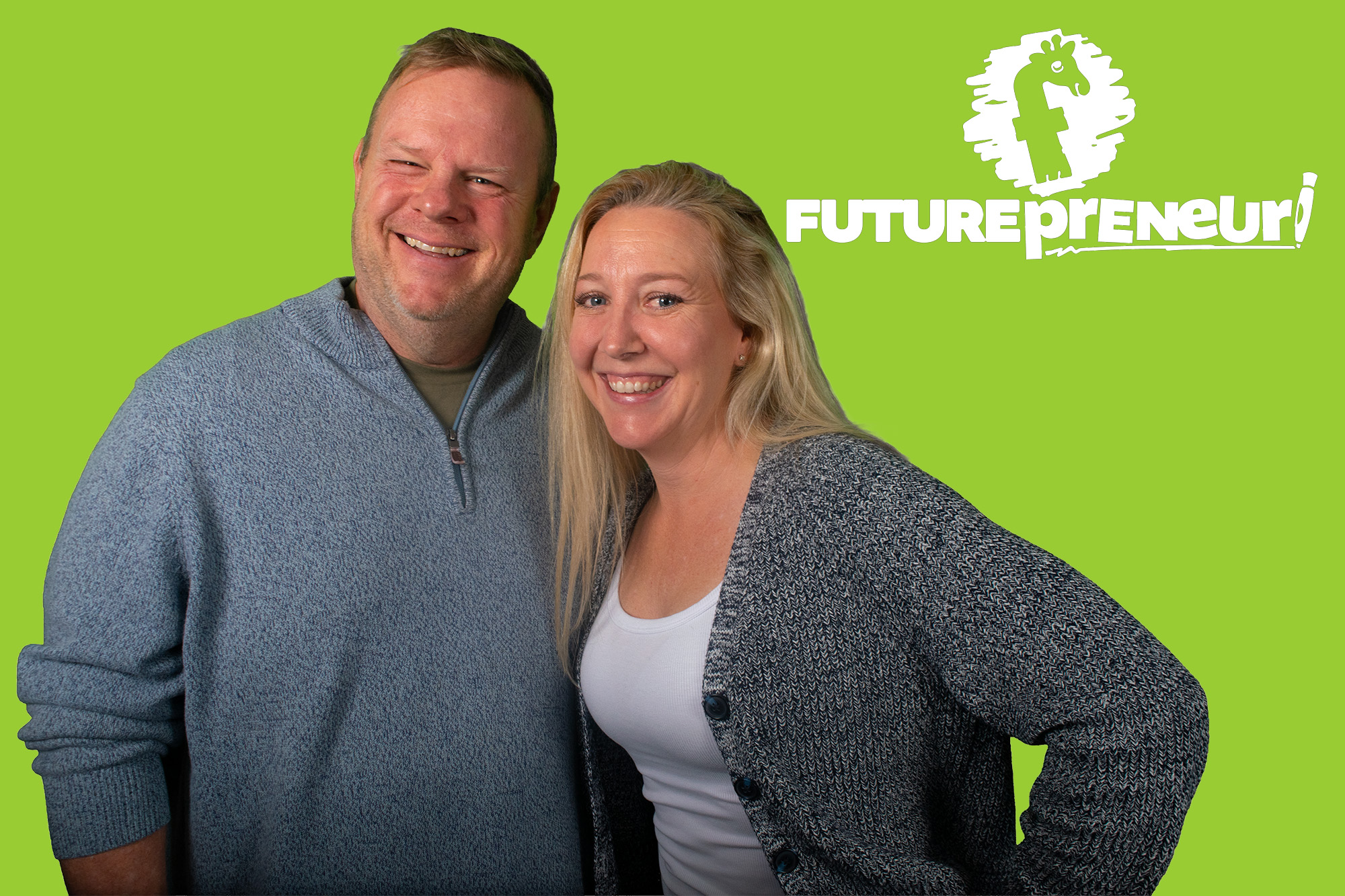
Welcome to lifelong Street Car. Today’s episode first aired on Downtown Radio 99.1 FM, streaming worldwide at Downtown radio.org, and we’re excited to bring it to you here as a podcast. Today we are joined for part one of our interview with Crystal pop off, the creative force behind proper Shops and a champion of Tucson’s entrepreneurial community. In addition to her co-working spaces and retail incubators, Crystal has launched a new line of products designed to help children understand entrepreneurship and a hands on inspiring way to also be featured at an upcoming event focused on empowering young creators.
It is my pleasure to welcome in Crystal Popoff.
And.
Excited to have you back in! Thanks, Tom. I’m so excited to be here with you. Well, this I think the last time we spoke, you were just getting up with this crazy notion of creating some kind of incubator for retail shops. I remember that it was called the Proper shops, I think.
Yeah, I remember that. And I think, after that conversation, you were like, I think I might have an idea. Yeah. We, we, we put the gallery in there, didn’t we? That’s right. Oh my gosh. I mean, not only did you put the gallery in there to some gallery, made proper shops, so we are very fresh.
We, we we incubated, we incubated before got to a new space. Very cool. So I, I know you got all kinds of projects going on, but we have to catch up. So proper shops. That was three years ago at this point, right? Yup. Is it still there? It’s still there. It’s still kicking. We don’t know for a long, but it’s been such an amazing three years with some with some really cool projects and companies like the Tucson Gallery that have been born out of that space, which is awesome.
I think that that is so understated in our, in our community right now, because I know I do, an economic development class for real estate agents. It’s a continue education. Okay. And we talk about what’s happening in downtown and and the growth and all these big, huge projects and hotels coming and others, two new hotels coming in, all these huge projects.
But sometimes we lose sight of the little things. Yeah. And not to say that it’s a minor, but it’s a smaller space with with proper shops. Yeah. And the, the idea being what you tell me the idea. Yeah. I mean, I think when I step back and look at all of my projects, whether it’s the El or pop shops or my new company, future Preneur, I.
Entrepreneurship changed my life, right? I was an engineer. I worked in corporate America for seven years, had a great job in Phoenix. But I wasn’t until I started into entrepreneurship that I felt fulfilled, like I was in a job. I got paid well, but I was not happy. And, like, just where am I going in life?
You know, partying on the weekends, still in my 20s and just not excited to wake up every day. And it wasn’t until I dab into entrepreneurship that I started this online sales company, and I was doing other things that I felt like my life got fulfilled, right? I could like, follow my passion. I had an idea like, I love creating and I want that for more people.
And at this time of my life, I’m, you know, when I started to, to create was really in my early 30s. And I look at my friends that were starting to have kids, they were married and they all felt stuck and looked depressed to me and just the career they didn’t love. And I’m like, why don’t they just try something, just do it right?
And I realized that the the fear at that time in your life, when you have kids and you have bills and it’s harder to step out into, like, I want to own my own business. So I think everything I’ve done has been kind of like to help that person, that person where I was in my early 30s, where I had a fear of, of doing a business, but I had support around me.
But people don’t have the support that I had, I think, at that time. And so I wanted to create that. So it started with, you know, executive suites that offices and creating, a reachable space that people could collaborate. And then I looked at, you know, retail downtown and how it was underserved. But there were yet retailers coming into the L saying, I want to open a store.
And that place wasn’t the best. And, the corner, Scott Zeitler had this beautiful corner. And, I’m like, let’s do it. Incubator for retailers. So that was how that was born. And I think just tying in everything you just said that is, so important to understand. The risk of entrepreneurship is really scary. It is because you’ve got this stable income, and sometimes you have to.
Some people make the complete leap, but you also, when you do your own thing, you’re incurring all kinds of expenses and all kinds of things that you don’t fully understand that are going to be out there. You know, you get, oh, okay, I know I need electric, but I didn’t know I needed $1,000 utility deposit. And where’s all this coming from?
And one of the things that was so helpful with the Tucson gallery, and I can speak from this, from this personal example, was that we didn’t have as many of those risks. We had a membership into a cooperative with a set monthly cost. We didn’t have to worry about surprises, but we knew this was the nugget we had to make each month.
And that gave us the ability to say, yeah, we can move forward knowing that worst case scenario, that’s our our nugget. Yeah. And, you know, my two business partners, Tony and Darren Crowley, successful real estate agents. I do well in my other career, but a gallery was new to us. Yeah. And I can tell you without that, that structure of the proper shops, we would never we wouldn’t have ventured into it.
So we were that entrepreneur that you helped overcome that obstacle? Yeah. That makes me so happy because now look what you’ve created and a bunch of debt and big nuggets in all kinds of variable expenses. Well, welcome to, brick and mortar. Right? Yeah. You tricked us. I know you tricked us thinking that we could do it. No, you got to go in.
And you created also the same thing with artists, right? So it’s it’s kind of like you pass that that generosity down. So it’s like I took the risk for you to open that. But now you’re taking the risks to help these artists that don’t, can’t quite take the risk. So it’s a it’s a ripple effect. And it’s beautiful.
And we could talk I think the collaborations between Desert Mariposa and Chelsea and Chelsea, that timber tote was blown out of there. I know all of those schemes that the relationships that people form from this cooperative space, and it’s, it’s it’s so nice because what you said earlier, like the gallery was early in on this process and we were a big part of that space.
There was concerns and my partners in mind that like if we move out there, it’s a void. And that void was there for like 23 minutes. Good. And then it got filled in immediately with another great entrepreneur that is that is focusing on, you know, selling basically shelves to other entrepreneurs. So now you’ve got this collective just working its way down into the smallest detail.
Yeah. And it it’s, it’s great to go back in there and see all the new energy and all the excitement that we had three years ago. Yup. So fantastic with that. Thank you. So I guess that just you retire, then you just think you’ve had some success and you just say, hey, I’m I’m done, I don’t.
You and I are a lot of like. And the like. What? Wait. I have 20 minutes on Monday afternoon. What do I create? Right. So, No, I’m kind of in a weird phase of my life where, like, it’s not weird, but where I have three kids and I’m looking at them going, what are they going to be?
You know, I’m out of the toddler phase. They’re all in school now. And but I’m not in the teenage phase yet, so I’m looking at my kids and I’m like, I want them to grow up to be incredible, right? And I want them to have the free life that I have, and to have the excitement and zest of life that I have and what really creates that entrepreneurship.
So I started looking at things of, you know, what’s out there where I can give kids the courage, right, is a fear of starting entrepreneurship. And it is scary. But what if we can like dabble that in when they’re young? And I and I always look back and think, man in my early 20s where I could go home and sleep on my parent’s couch if I needed to, right?
If the business failed, someone will take me in. That phase should be when people are doing it right. Take the risk in your early 20s when it’s not as risky, right? Then when when you’re married and have a family and a mortgage and a car payment, right? That’s a little more risky at that age. So I wanted to get entrepreneurship into kids early.
I’m looking I mean, we we know schools are doing the best that they can do, but it’s also hard for a teacher to teach entrepreneurship when they’ve never done it. Right. So you have this kind of like if this little void there, which they’re getting better. The entrepreneurship is getting into schools and I’m appreciative of that. But I wanted to give kids that are my kids age the start.
Right. So the old lemonade stand, we don’t see it as much today, right? Why not? And so we, I’ve created a bunch of businesses in a box through a company called Future Preneur where parents can order business. It comes with the cutest kid’s business plan, right? Where the teaches them how to create something. We have all different types, right?
We have build a dog house and sell it, which teaches the trades we have. Open your own mini bakery where we walk through, you know, pay attention to product pricing and budget and packaging and what really makes a bakery successful. Right. And they’re going to go through it. They’re going to launch their little bakery. They’re going to sell to neighbors and grandma and grandpa, they’re going to make 60, 80 bucks and they’re going to be thrilled.
But the lessons that they learn along the way of how does entrepreneurship even start is done in our future Preneur business box. And it’s fantastic. First of all, the name future Preneur. Did you come up with that? Yes, that’s freaking brilliant. Well, and then I looked in the URL wasn’t there, and I was like, what, what what’s grab it.
No, I start to the year. Every great business starts with the URL. And if you know how many GoDaddy URLs I have in my cart, it’s like, oh, when did I think that name was a good idea? So yeah, when it comes up for a new and you’re like, what? Who hacked my account? I had that idea one day and bought the URL.
Or you, you go the other way and say, oh my gosh, I forgot about that. Let’s let’s get that. Let’s do it. So age, age age group then you’re talking 19. So this really is geared towards like what age group. Well I say like 7 to 14 okay. And if all the parents out there are going to relate to this, but once you have a 14, 15, 16 year old, which is a wonderful age, right?
I’ve lots of nieces and nephews at that age that you’ve a little bit lost them at that point. I mean, they are now instead of Mommy and daddy or, you know, grandma and grandpa being their biggest influence. It’s now Taylor Swift, like it’s who on who’s on TV. It’s influencers, it’s friends. They’re they’re full on is the sports.
So I really think that parents need to hone in on that 6 to 12 age because they still look at you as the influencer right there. You’re their hero. So let’s spend the time, spend a few days a month sitting with them, building a business, building up their courage, celebrating their wins. And that’s the time where you really need to start.
In my opinion. Okay, I also know tons of people, which is a very sad thing, but that that both parents are super successful. But why is their kid now supposed to be starting college and they have zero drive and they’re living at home, right? What happened there? Right. Because parents are driven. They had good people to look up to.
But why is this kid unmotivated and and whether they have a drive or not, that inner sense of I want to bring value to the world, whatever. That value doesn’t have to be entrepreneurship. But I have a gift and I want to bring it to the world, and I want to provide value in this community. How can we get that in there?
And I think maybe that kid just didn’t have enough opportunity when they were growing up to see how incredibly, how incredible it feels to provide value to your friends or your community or your, you know, your family. So, that’s what future Preneur is doing. That’s fantastic. And yeah, I this is a maybe a segue and I don’t know, this might like in our interview a bit.
Yeah. Yeah. For years I’ve been involved with financial literacy and helping a very similar age group, typically a little bit older, though understanding some of the basic concept. And we always get back to this concept of practice. Right. Like when we when we’re talking about saving money. And there’s formulas out there that say you should save 10% or 20% or 30% of your income.
And there’s different rationales for all of that. And I go in and I talk to these, these kids that usually they’re in high school at this point. So yeah, they’re lost apparently. Yeah. But we talk to them about so does that mean if, if you get if your goal is 20% and you get $10 from, from grandmother on your birthday, that you would take $2 and put that away and they kind of laugh like, well, that’s not going to do anything like, well, but you need to do that.
Yeah. And their first thought as well, all the compound interest that they’re going to make. And you know, if you do the math, $2 over a long period of time turns into like $2.08. So it’s not the compound interest. It’s the practice. Yeah. It’s getting used to every time I get this I do that. And you know, we liken it to sports.
If you’re if you’re a basketball player, you’re going to shoot hundreds of free throws in your practices. You’re never going to shoot hundreds of free throws in a game. And the idea is that when the time comes, you’re not you’re tired or sweaty. Your your legs are shaking you you need to perform, but you practice so much, your body just knows what to do.
Yeah. And that’s what saving $2 out of ten does for a child when they’re when they’re doing that, every time is at some point their checks are going to be $100 or $1000 or $10,000. Yeah. But the habits don’t change. Yeah. That’s that’s what I see with with what you’re doing. It’s it’s creating a practice. So, you know, $40 isn’t going to change their life, but the experience of generating $40.
Yeah. Will turn into generating 400 or 4000. Yeah. And I think the piece that’s so valuable that you’re doing so but you and I come from a standpoint of man, we know what is at one time in our life, I’m sure I have a couple times. So make sure you have to. All of a sudden we had no money in our bank and we’re like, okay, where did the money go?
Yeah, after I opened the gallery, yeah, right after I left, after I mentioned proper shops. Yeah, I remember that moment. I can’t think way back to three years ago that I had a savings. And what did I just do? Yeah. So, but, I think that the key for especially kids in high school that you’re showing them numbers, and you and I know what that means, but in their brain, why do I need to know this?
And I think you almost have to bring it down. And this what we try to do, even at a younger age and future. Preneur. But the same message carries for high school and college is what do they really want, right? And most people don’t realize it until they’re stuck in a job that they don’t like. Maybe they’re in college, maybe they’re right out of college and they’re like, oh my gosh, I just took this, job.
But now I have to pay rent and my car payment and I have to get gas, and I still want to go out with my friends, and holy cow, there’s not enough money to do it all. Now I’m in trouble, right? So how do we plant those seeds in high school? And I think the biggest thing, and we do this in future Preneur is set a goal that they want, right.
And in the age that I that we’re looking at, it’s like, what’s that toy or that gaming system or that something that you want, right? So my daughter, like I don’t let her buy slime anymore whenever she she just wants to have slime. But when she makes her own money, she can spend it on whatever she wants to.
So she made like $140 in her t shirt business, which is one of ours, where you design and and you put your t shirt on a print on demand company, and then you go to market your t shirt. And she loved it so much that she would just tell it to everyone. And, she made like 140 bucks or something.
And I remember when she walked in to that store and I, I can’t tell her anything because, you know, the mom and me is like, honey, you have a million of those at home. Why on earth do you need another one? Right. Let’s spend your money on it. But I can’t tell if it’s her own money, I tell her.
I can’t tell you that I can’t tell you what to do with it, to go for it. I mean, the joy, right? So on, on the little levels, like, what do those high school kids want? And I think parents need to learn from this is don’t buy them everything. I know I, I heard, I a guy that does this which we will start doing this but he puts if they want something, he’ll buy it.
And he puts it in a, plastic case where they can see it. But he locks it up and his motivations, he wants them reading books. So he said, you read eight books, right? And write about them, what you learn from them. And these are all personal development, financial development books. You relate books and you can get what you want right?
So what’s that? What’s that thing that they want and what’s their incentive to get there? And parents need to start really thinking about that. If you give your kid everything and you make it cushy for them at a young age, they’re never going to learn grit.
Well, thanks for watching. This has been a fabulous episode. In fact, we’re not gonna be able to fit it all into this particular, segment, so tune in next week as well.
So we’ll have a two part series with, crystal pop off. I want to give a big thanks to our executive producer, James Portis. Our associate producer, Amanda Burns. I’m Tom Heath. Our theme is it comes from Ryan Hood. We thank them for letting us use Dillinger Days. You can revisit past episodes at Life Along the Street, car dawg.
Check us out on social media, Instagram, Facebook, Spotify, YouTube, all those places. Our handle simply life along the street car until next time, enjoy a fabulous community and stay curious to sun.
And.