

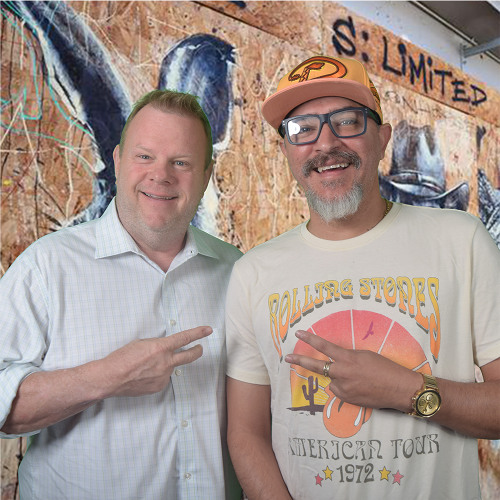
Ignacio Garcia – The Stories Behind Tucson’s Murals
Episode Highlights
🎨 A return visit with Tucson muralist Ignacio Garcia
Ignacio Garcia joins Tom Heath once again on Life Along the Streetcar to share what he has been creating since his last appearance and to offer a fresh look at the evolving world of Tucson mural art.
🧱 The creative process behind Tucson’s most memorable murals
This episode explores how Ignacio develops his large-scale works, from early concepts and visual research to the emotion, composition, and detail that make each mural feel timeless.
🌵 How the Sonoran Desert shapes Ignacio’s artistic vision
Ignacio reflects on the landscapes, colors, people, and atmosphere of Southern Arizona that inspire his work and give his murals their unmistakable urban Sonoran identity.
❤️ Why emotion matters in public art
From Rosa’s Resistance to newer projects, Ignacio explains how he tries to build feeling into every piece so viewers connect not just with the image, but with the story and spirit behind it.
🖌️ A closer look at hand-painted mural craftsmanship
Listeners get an inside perspective on Ignacio’s brushwork, technique, and commitment to creating murals entirely by hand, adding texture, depth, and personality to every wall he transforms.
👀 Hidden details and Easter eggs in the artwork
Ignacio shares how he includes subtle surprises and layered elements in his murals, encouraging people to spend more time with the work and discover something new each time they visit.
🌌 A new mural inspired by the desert at night
The conversation highlights one of Ignacio’s newest works, a dramatic mural shaped by moonlight, desert memories, and the mysterious beauty of Southern Arizona after dark.
🌼 A preview of a future Palo Verde mural project
Ignacio also discusses an upcoming mural tied to Tucson’s Palo Verde Bloom Festival, hinting at another large-scale public artwork that will connect art, nature, and local culture.
✨ A rare chance to own a piece of mural art
One of the most exciting parts of the episode is Ignacio’s announcement of a special auction featuring individual panels from a temporary community mural project, offering the public a rare opportunity to collect original mural art.
🤝 Giving back through art and community
The auction is about more than ownership. Ignacio shares how part of the proceeds will support local organizations, turning the project into a meaningful way to give back to Tucson.
🚋 Why this episode belongs on Life Along the Streetcar
At its core, this conversation is about creativity, place, and the stories that shape Tucson’s urban core — making it a perfect fit for the mission of Life Along the Streetcar.
Episode Description
Public art has a way of stopping us in our tracks, but the best murals do more than brighten a wall. They tell stories, preserve memory, and invite people to see their city in a new way. In this episode of Life Along the Streetcar, host Tom Heath welcomes back acclaimed Tucson muralist Ignacio Garcia for a rich and revealing conversation about the ideas, emotion, and craftsmanship behind some of the most recognizable murals in Tucson.
Ignacio has become one of the defining voices in Tucson public art, known for creating large-scale works that feel both deeply personal and unmistakably rooted in the Sonoran Desert. From the beloved Running of the Piñatas mural to the monumental Los Vaqueros mural and newer projects across Southern Arizona, his work reflects a blend of history, landscape, culture, and human emotion that continues to resonate with locals and visitors alike.
This episode offers a behind-the-scenes look at how Ignacio approaches mural design, why research matters so much to his process, and what it takes to create artwork that feels timeless rather than trendy. It also introduces an exciting new opportunity for the community: a rare auction that will allow the public to own individual panels from one of his temporary mural installations, with proceeds helping support local organizations. For anyone interested in Tucson art, Arizona murals, public art in Tucson, or the creative energy shaping the city’s urban core, this conversation is packed with insight and inspiration.
🖼️ Painting Tucson’s Identity Through Timeless Public Art
One of the strongest themes in this episode is Ignacio’s commitment to creating murals that last beyond the moment in which they are painted. He explains that his goal is not simply to make something visually striking, but to build a piece of public art that continues to hold meaning years later. That philosophy shapes everything from the subject matter he chooses to the way he composes each mural.
Tom and Ignacio reflect on how Tucson’s mural scene has grown over the years, with new works appearing regularly throughout the city. Even in a landscape filled with impressive art, Ignacio’s murals stand out because they feel intentional and deeply researched. He talks about the amount of preparation that happens long before paint touches a wall — gathering visual references, studying faces, exploring details, and making sure each image carries enough depth to tell a larger story.
That attention to detail is a major reason his work continues to connect with people. Whether it is the expression on a face, the texture of a desert night sky, or the subtle symbolism hidden in the composition, Ignacio’s murals invite viewers to slow down and engage. They are designed to work not just as backdrops for photos, but as layered visual experiences that reward repeat visits. In a city known for its artistic spirit, his work helps define what Tucson murals can be at their best: beautiful, thoughtful, and lasting.
❤️ The Emotion, Research, and Sonoran Inspiration Behind Ignacio Garcia’s Work
Another central thread in the episode is Ignacio’s creative process and the emotional weight he brings to each piece. He shares that much of his inspiration comes from his experience of the Sonoran Desert, the people of Southern Arizona, and the feeling of place that makes Tucson so visually and culturally distinct. That connection gives his work a depth that goes far beyond technique.
Tom points to murals like Rosa’s Resistance and Ignacio explains how emotion becomes part of the art. Rather than simply painting a portrait or scene, he tries to capture something internal — determination, tension, memory, wonder. He describes how the landscape, his upbringing, and the small details of everyday life often shape the emotional tone of a mural. That instinct is part of what makes his work feel so alive. Viewers are not just seeing an image. They are responding to a mood, a story, and a human presence that seems to live inside the piece.
The conversation also explores Ignacio’s hand-painted approach to mural making. In an age when many artists use projection tools or spray-based methods, he emphasizes the importance of brushwork, physical texture, and direct engagement with the wall. That handmade quality adds another layer of authenticity to his pieces. He also reveals his playful side, talking about the “Easter eggs” hidden within many of his murals — small details, visual surprises, and bits of humor that encourage people to look closer. This episode makes clear that Ignacio Garcia’s art is not only about scale. It is about intimacy, observation, and making Arizona mural art feel both monumental and personal.
✨ A Rare Chance to Own a Piece of Tucson Mural History
One of the most exciting parts of the episode is Ignacio’s announcement of a unique upcoming auction tied to a temporary mural project at the future Gibson’s Food Hall site. Originally created on plywood panels to deter tagging and enliven the space, the mural evolved into something much bigger: a community-centered installation made up of expressive faces, animals, layered imagery, and Ignacio’s signature mix of realism and urban Sonoran style.
As Tom and Ignacio explain, the project took on a life of its own. Community members connected with the work immediately, and Ignacio was even approached by a buyer who wanted to purchase the entire collection outright. Instead of letting the mural disappear into a private collection, Ignacio chose a different path. He decided the work should remain connected to the community that inspired it, which led to the idea of auctioning the panels individually so more people could have the chance to own a piece.
That decision says a great deal about both the artist and the city he works in. The auction is not just about collecting art. It is about access, shared ownership, and giving back. Ignacio notes that a portion of the proceeds will benefit local organizations, especially those connected to children, art, and community support. In that sense, the project becomes more than a temporary mural or an art sale. It becomes an extension of Tucson’s collaborative spirit. For fans of Ignacio Garcia murals, Tucson artists, and local art events in Tucson, this is a rare opportunity to engage with mural art in a completely new way.
🚋 Why This Episode Matters
This episode of Life Along the Streetcar is a vivid reminder that murals are more than decoration. They shape how we experience neighborhoods, how we remember stories, and how we connect with the culture of a place. Ignacio Garcia’s work continues to leave a major mark on Tucson’s urban core, and this conversation offers a deeper understanding of the thought, care, and emotion behind that impact.
Listeners will come away with a stronger appreciation for the creative process behind Tucson mural art, the importance of making public work feel timeless, and the way a single artist can help reflect the identity of an entire community. From desert landscapes and hidden symbols to community collaboration and charitable giving, this episode captures the many layers of Ignacio’s work and why it continues to resonate so strongly across Southern Arizona.
Tune in to hear the full conversation with Ignacio Garcia, and discover what is happening behind the scenes in one of Tucson’s most exciting public art stories. Visit lifealongthestreetcar.org for more episodes, follow Life Along the Streetcar on Facebook at https://www.facebook.com/LifeAlongTheStreetcar, and listen on SoundCloud at https://soundcloud.com/lifealongthestreetcar. Then share this episode with someone who loves Tucson art, public murals, and the stories that make our city unforgettable.
Transcript (Unedited)
Welcome back to another episode of Life Along the Street Car, we focus on the social, cultural and economic impacts inside and around the urban core. And we define that as being from a mountain to the University of Arizona along the, modern streetcar route.
And we’re, we’re focusing on some art with these next few episodes, and we’re welcoming back into the studio a long
time
returning guest you’ve been on, like, every every studio we’ve been in, Ignacio Garcia has been doing some type of, desk presentation. We did, you know, just audio that we did one in the gallery. Then we did one.
It’s like. I mean, even going back when I did the running of the pianos, remember? Oh, yeah. That was 2019. That’s when we first met. Yeah. 2019. That’s crazy is when we first met. That spot is still an incredibly popular mural. The guy oh my God, it’s it’s it’s one of the, Tucson’s favorite. Well, it’s it’s hard to label Tucson’s favorite because every, every
seems like every couple of months there’s a brand new mural and so on.
It’s just absolutely stunning.
Yeah. It’s like it’s keeps competing on its own. Yeah.
I think last time you were on, it was almost a year ago, for the rodeo.
Yeah. The
hundredth anniversary. And you did that small, little tiny mural about the rodeo. The that little tiny one you did
with the three
cowboys. Do you remember
that?
Yeah, it’s quite tiny. Yeah. That take forever. That took you with, like, three
months to paint. The first three months, it was exhausting and it was intense. And so as comparison, something that’s a little bit smaller, say like the running of the pinatas, how long does that take you to tell me that?
Weeks like that. Maybe couple weeks.
Two weeks at the most average two weeks.
Yeah. It’s weird because
the murals at that time, two weeks was the average. Right? Like, if you really get into it, you were put eight hours a day, maybe six, six days out of the week, two weeks. You definitely execute it now. It’s like it’s coming to like an average.
It’s a month to paint a mural because it keeps getting bigger and bigger and bigger. But after the rodeo, after the three months, that was an insane challenge. Since then, all these big murals seem so small to me.
I’m like, oh, I could do that. Like, really? Are you sure? Oh yeah, it’s pretty easy. But I mean, the little thing, I don’t do that.
No problem. Yeah, I think that that intensity kind of,
helps. That helped a lot to kind of maintain the speed. These big projects, in fact, these other murals that are going to be coming up. At first I was looking at like, these are big. And I’m like, now I went back and looked at I’m like, oh, okay.
That’s again, that’s pretty easy. But it’s been a year. And, it seems
like you’ve just been on vacation, not really doing a whole lot. And no, I mean, I definitely need a vacation for sure. But, you know, when you love something, you do it. It’s it’s something that, you know, you just have a passion for. It kind of fills in your little vacation time.
But we’re going to talk about a big event for you and an interesting one,
for the artistic community coming up here. And, a few minutes before that, I do want to get a sense of of what you’ve been working on. Yeah.
So, I mean, I will talk about 202 in a minute because there’s a beautiful one.
But, like, how have you been doing other stuff, like things in the urban area that that are, or what have you been doing?
Work a lot. Mainly a lot of personal pieces. They’re not. What does that mean? Personal pieces, like large canvases, you know, like, you know, the collection that I’m trying to create for the next year.
Hopefully next year, I’ll have it finished. It’s a slow process, but, I mean, it’s just personal. Sinaran kind of. Okay, you know, things that I like to do. Nice. But it’s just taking forever. Yeah, well, it’s,
probably is. You know, we see these beautiful murals on the walls, and I know you’re, like you said, you’re doing other work.
Yeah. And I don’t think people fully understand
that the the painting of the mural might take weeks or a couple of months, but it’s that planning, the design, the amount of research that you do to come up with a face. I have a timer, though, with the Cowboys, like the amount of of photos that you looked at to come up with those three faces of those cowboys.
Yep. Yeah, I I’m very particular. I rather have more
information than just focusing on one. You know, the more variety of different elements that I have. It just kind of gives me the, free range of what direction. In fact, you can learn a lot from that too, as well. It kind of guide you on, on something even more.
Engaging. Yeah.
So, it’s not as well known as some of your other murals, I think maybe because the
location of it. But I still when we do our mural tours, I always bring people by Rosa’s resistance.
Yeah. That one. That woman is so
beautiful in such a dark and dank environment. Yeah. And that look of determination on her face is just.
Yeah, it’s just intense.
Yeah. And I try to put emotion into these murals. In fact, we had
a I had a presentation or an interview, but the Vantage West and the I was a featured artist. And one question was like, it seems like every painting that you do, there’s a, an emotional people get really emotional attached to it.
And, and I’m like, you know, and she and she actually mentions like, how do you do that? And I’m like, that’s a very good question. I, I don’t know, I think it’s from my experience of the Sonoran Desert and the people and my upbringing and, overall the landscape and just just a
little details that tells the story.
And somehow I just kind of get captivated by that, and I just kind
of become amused. And somehow I feel that emotion, and I want to and I want to express that. So that’s the same thing with the, Rosa the resistant.
Yeah, that that’s just just phenomenal. And then, all of your work is, it’s, it’s, you know, on tour.
And I think it this is representative across the board of of of of of Joe Patrick and Jessica Gonzalez and Rock Martinez community bar apprentices. They’re the,
the level of of, of research and preparation before it goes on the wall is intense. It’s intense. And but
that’s it has to be done. Right. Because, you have to have that value that will hold its time.
And that’s a very crucial key element to the murals, because you don’t want to have a mural that kind of represents that moment, because five years from now it will become that moment. And it just kind of loses and ages it all, like it kind of becomes part of that. So I try to make something that is timeless and easy for the eye.
I mean, there’s a lot that goes behind it and puts up a little bit of, you know, Easter eggs. Now, my son’s actually helping me out with those Easter eggs. Okay.
So I like do whatever you want at this point. And, yeah, Easter eggs being those things that you got, you got a search
that that mural over and over again and you start to find these little, little things that are sort of hidden in the artwork.
Yeah. And I did that deliberately for the purpose of people to actually be more engaged to the mural and actually study the design and the hands and the brushstrokes and like how it’s, you know, because people just know they won’t just take a selfie and then just take off. Right. But because now they know there’s, little Easter eggs, it forces them to kind of engage more and to study more of the, of the, the painting
to you.
So you brush and paint the mural so it is completely hand brushed. You don’t use any compressed air and. No, no, no, I don’t, I don’t like I, I try to be environmentally kind of, clean on that. So even the big one like the, the, the three cowboys that that was
all hand brushed literally. I got brushes this big, toothbrushes this big.
That
happens. So I had to like, it’s like a, it’s like a broom. Yeah. Like I said, I’m broom. Yeah. That’s what’s nice. Yeah. Well, we, I want to bring one up here that, it’s not in the urban core, but it is. It’s. I think it’s your newest one that just finished the toner tour, correct? Yeah.
Just switched it, to almost a week and a half. So we’re going to we’re going to bring it up on the screen for, for people to look. Yeah. This is, this is not. You are not in the mural. This is not you’re not you’re not the you paint yourself in the mirror. Yeah, yeah.
But this one, it’s just the the the sky, the dark.
It’s the the blue is just fabulous. Yes. So, when I was accepted to
do this mural, I wasn’t expecting to get accepted. So that was a surprise. And I think because my presentation was, understanding more of the Sonoran landscape, and I kind of connected with the tunnel. Cool. And then going there. And they’re known for the night events, and I just wanted to kind of highlight that idea.
And it brought back those memories when I used to go out with my friends at
middle of the night, you know, during the weekends, and sometimes you have this nice bright blue moonlight and this twilight is just so intense. You can go driving out in the desert without no lights. It’s actually, in fact, it was actually more safer to drive without the lights
because you can actually see the whole landscapes.
In fact, you see some cows, you know, some potties. But, but once you turn on the light,
everything becomes black and your surroundings, so but once your eyes adjust in like five minutes, they can you can drive. Yeah. You can walk, you know, in the middle of the desert. That’s
fabulous. Yeah. Absolutely. But it but at the same time it could be dangerous because there’s, more these predators swipe up and, just swipe up from the there, pull up there.
And then, and, and but that’s when the animals are more active. Yeah. Yeah, yeah. With that moon. That is a yeah. It’s it’s one of those murals you have to experience in person. There’s so much interaction, with
this mural. The stars actually shimmer. Okay. When you watch walk, they actually shimmer. I was someone who was
on one of our other tours.
They said it’s
like three d. It sort of comes off the wall. It does.
It’s weird. It’s weird because, when you walk in from the distance of walking towards it, you can see the whole landscape as if you’re
outside. The more the closer you are, the more detail comes in, and then it makes you feel as if you are the
critter looking up as as you are a prayer predators.
So I felt like that was a cool concept of kind of making that look that way. And then and then once you start
going from one side to the mural to the other, there’s so much detail. Each section becomes a new, new kind of environment. And then and then of course the then there’s the three little Martians I had.
Well, my son
had to do that there. He actually hand painted that and drew it. Those, those are the Easter
eggs. And this one, the Martian. There’s
three Martians and three little UFOs. Okay. Yeah,
yeah, yeah, like UFOs, you know? 252
I love your 250
plus project that had some UFO. So
I might have my I might have been abducted.
I don’t even know. You know, you’re you are from the other world. Yeah, that’s what I think. I think my home is back out there,
you know? So it’s just people just
came to visit. And then I was hoping to have some breaking news, and we’re close to some breaking news, but not quite the breaking news.
Yes, we do know there’s going to be a new mural coming up soon.
Probably
next month. Yeah.
Next month being so be April of 2026. Probably.
Yes. The first week of April.
Okay. Yeah. And it’s going to coincide with the, the Palo Verde Bloom Festival. That all right. This is the first year they’re doing it right.
Absolutely. Yeah. This is a Hispanic
chamber and they’re doing the southern Arizona, or the centers on Hispanic chambers doing the Palo Verde bloom Festival and, tying all of these things around my allergies.
I mean, around this
beautiful world. Yeah, that would be amazing.
If you go to this mural and you will start getting allergies. So, yeah, you have to pump out some know sponsored by. Yeah, yeah. The
location, you know, the location, but it hasn’t been made public, so we can’t know.
Now, you suppose
that, you know, but we’re going to have another 3 to 5 or so story mural.
Yes. Talking. And it’s going to be about the palo verde bloom, but it’s. Yeah, it’s a person though. That’s it’s actually. Yeah, it’s, it’s, it’s I actually painted this and they loved it so much,
that it actually kind of ties into all these little elements of, I don’t know, just the culture and just the look of the yellow of the intense yellow of it.
So, originally. So while I was painting the mural of the
vaqueros, one person said and say, hey, we have a wall in mind, you know, and, so, like, showing me that I want to get to the, I’ll
take it, you
know? I’ll take it. Yep. There we go. We’ll go that. We’ll go there in a second, but I’m sorry I catch up there.
So, I wasn’t sure I was in it. They wanted
me to do that mural. It was a nice big building. And then. I don’t know where they say, we heard about this Palo verde. You know, Blue Fest, I think would be great. Would you be able to paint that paint parlor, which we called the the painting of Palo Verde?
Yeah. Nice.
So, he, he loved it. It
goes. Can you paint that instead? That way we can kind of help us out with the whole, you know, the promotion,
the motion and everything in the first year. And it sounds like that’s a brilliant idea. So we try to pitch it in there theme, but it just didn’t follow through.
Timing was bad, and all these little things were just happening. So. So then, somebody else took over the project. So then it got moved elsewhere to closer downtown to downtown and, and, and then we’ll just still we’re still waiting on other approvals and all
that. So nice to see.
So we’re excited because this will actually hop up on what nature
of the poverty tree represents, of course, the culture and the, and the elements of spring.
And then again, you know, of the festival.
But I like how those, those elements tie in because we and I don’t want to get too far off track here, but the, you know, the goddess
of agave, Bay Rock Martinez. Yes. It was beautiful. Yeah, but also really represented such an important plant and and he gave us a chance to really talk about the agave.
Yeah. In a way that was because of that artwork and probably the palo verde will or it
definitely will open up a lot of doors on knowing the, the, the history of of Tucson, Palo trees, an amazing tree. What it does. So as time goes by, I like I would love to talk more about it, but it’s going to be a different complete story about the Palo Verde tree but amazing, amazing plant.
Well, I will probably have to have you back then to talk about that particular mural. Yeah, I could actually bring, the, Oh yeah. Rob to I think, I mean, Paula. Oh, Paul, I know I could bring Paula to as well. Yeah, yeah. But really, the reason I wanted to have you come in
today, is because at the end of this month
You’re doing a, kind of a unique thing. We don’t see this happen very often, but, so let’s set this up. This is
going to be based upon a temporary mural. Yes. That you put up on. What’s that? What’s soon going to be called, Gibson’s food hall was. It was Johnnie Gibson’s.
Yes. And my understanding was that they put up these pieces of plywood. Yes.
And, like, started getting graffiti or tags on it. Yeah. All right, well, let’s stop that. And they hire you? Yes. And you went out and painted on the plywood? Yes. And then the graffiti stopped. It
did? Yes. And, And
you didn’t. Was it 30, 30 yet?
30 individual
faces and and animals. So, it it was weird. Again, with the people of Tucson and the community, everyone really loves to help each other and very supportive and so I felt like, what a great way to kind of reflect that back. Yeah. You know, I mean, I learned a lot,
during the, the vaquero mural and, the process of dealing with the city, you know, and dealing with, dealing with, organizations that know what the community is
looking for.
I realized that I need to embrace that, too. And then to kind of highlight the real other moderate the new current community of of Tucson, I feel like what a great way to mix, you know, present, past and then nature into one thing, because that’s kind of what I see in Tucson.
So many of the faces then that are on there are are composites.
They’re not necessarily, you know, some are actual people, but yeah, many of them are composites. So it wasn’t everything. It was just a it was a smaller project. I was not even thinking about what the response would be. It was just there to kind of, just to kind of, you know, put something there and it kind of led one thing to another.
And just the ideas started coming in
and they loved it. And then I was like, what are you gonna do? I asked him, what do you do with these pieces? Like, I was like, well, I don’t know. It’s like, can I keep them? Sure. And then after a while I’m like, what
am I gonna do with these pieces?
Yeah. So then I was like, you know, I’m going to frame them. And then I’m like, I know people. And then then people started asking immediately, it was crazy.
During the time of me painting it, maybe a weekend.
I get a call from an investor. It’s like I was like, hey,
I want to buy these pieces for me on my the whole collection.
And I was like, well, I was like, what do you have in mind? Like, well, I want to buy it for $50,000. I’m like, okay. But it’s like, it’s not even finished because I know. I was like, I know I was like, you’re
going to get a lot of media and all that stuff. And he knows already seen it through the media.
So I’m like, he wanted to have these pieces. And I’m like, okay, cool. It’s like, let me think about it. And then, the more I thought about it, I was like, I kind of feel like this,
this piece was for the community, you know what I mean? This is I felt like the community was part of them helping me out, and I’m helping them out.
I just felt like it shouldn’t be controlled in one person. So I took him, I
declined, he got upset. He really did, but I just didn’t want to. I felt like this piece was, you know, and now that people are asking, they want a piece of it. I feel like by auction in The Moth, it gives him the, the, the control of the public for anyone that wants to get a piece of that, I felt
that was the best option.
Yeah, well,
there’s 30 of them, so. I mean, you know, I guess the price tag seems pretty exorbitant. But then, you know, but then, you know, like, that’s 30 individual portraits. That’s pretty good deal for it’s a, it’s
a he could triple that money easily or double easily for sure. But now that I realize okay, so so now with the auction, I’m thinking of I’m still working on trying to put that those together.
And then once everything sells, half that money is going to go to organizations. You know what you know. But like anything involved with children and art and, community, I still looking for the
five solid, you know, organization that I feel that would be best fit for Tucson that can actually gain and kind of help them out tremendously.
I have one in mind that could probably help me out to kind of know where to work to put that money back to the community. But it
was weird. I mean, just to find out that a small project, it’s just the representation of Tucson is how we help each other out. And it was a wonderful way for me to give that, to give it back.
And I would like to talk just about there are three. And
that I had in mind that we’re going to talk about, you probably
know them. But one first of all was you did Johnny Gibson. I did, and I thought that was
so
appropriate. Obviously it’s on his building. Yeah. And was that or was that even, like, a thought or that there was that, like the first thing he thought of, or did that come as an act like, how did that come about?
Well, it just happened,
you know, I mean, again,
this was I did not expect to have this collection to be this profound in the intention, but they’re just like like you and Johnny Gibson. Sure. Like you had this year or whatever. And again, we were trying to fill up the space. And then I was and I,
and I asked King, give me a picture, which is Steve, which is his son.
And and I asked Steve, give me some pictures. I think Western or anything goes, oh, yeah, I might have something in mind. And he showed
me this picture. I’m like, oh, this is pretty cool. So, but to make it to, to create an image, you know, with no projection, no nothing that, you know, just literally freehand or looking at the picture, you know, I have
to make it exactly like Johnny Gibson.
And sure enough, it turned out exactly like him. Yeah. It looks it looks absolutely fabulous. Then. Paul.
Oh, yeah. Oh, yeah. We.
Paul, Paul, Paul. And we added Paul in there just to just again it was it was just random stuff. It was
fun. You know it was something that we were and just engaged in that moment. But it wasn’t intentionally and a lot of these faces,
not like I think.
Oh, and Johnny
Gibson might be the only two actual people in there. Everyone else is like. Like a composite.
Yes.
When you look at those and because we’ve seen the prints in the gallery. So we’ve had this prints. Yeah. And so and it’s really interesting, if you cover like one side of the face and then you cover the other side of the face, it’s like two different people.
Yes.
Yeah, yeah. And I have a weird thing like that and I have and then I have, I finally realized why my face is, look, it’s actually in the eyes. The
eyes actually look kind of like how to expand, like instead of the eyes looking like
this. Right? But they actually look slanted like this, which is weird. This is amazing.
Great
radio. But yeah, I’ll have to check out the video. Yeah, it’s it’s weird because like, when it’s I realize it’s the brush. I use a chisel brush. And the way I paint it and I’m right handed, it actually goes with the flow of the brush and my hand stroke.
And then I and I come in. People know they don’t notice it.
But then you have you cover one side of it you like and you see that you have totally two different personalities. Yeah. Well
the and it’s the shadowing too. Yeah. The way you do the
shadowing of it because they, they, they, they really as a person it looks a whole and then it, so it’s almost to me like three different people built into a mirror because we got the composite.
Yeah. You got the right in the left. It’s just. Yeah. That’s fascinating.
Yeah I my mind just works on those little details. I like to have that little mind trickery of, of, you know, kind of messing with people’s heads and
when we’re showing it to people, you know, they, they always they’re like sad because of the. Oh, it looks like someone did graffiti.
Yeah. It’s yours. Like, yeah. I deliberately did the purpose to hide if someone does more graffiti over it, it’s just to kind of and
I even mention to them it’s like, well, you know, if they what if they tag over it and I’m like, that’s fine. There’s a tag over it. It will blend in with the background. Yeah.
So I did so much of it that even my own signature blended
right in, so you can even see it. So I think the next one we have up here, I just love the graffiti of it. It’s, it’s of a of a woodpecker. Yes. And so if you look really closely into it, it’s got like the graffiti
is, it says like
knock knock.
Yeah. It was there, you got like all this stuff going go and all of them are like that. They’ve got these
little jokes
in the name
of it. Yeah. Is is is kind of put in there in a really, subtle way.
Yeah. And then that there’s a that sign was already there before the warning and the warning sign was already there.
And so I’m
like that kind of myth that was funny at all. Yeah. You got, you got
a, when you got a guard
woodpecker. Now keep an eye on things. So during the auction,
I will be displaying them there. So that would be the last time they’re all going to be united. But I felt like once you actually see them separately on their own as an art piece, I felt like that that would be a great way.
So there’ll be, I got to figure out that whoever buys tickets for that event, then they’ll be food and drinks
and then that would be a great way to kind of be the last engagement of these pieces. For those, they could, you know, that, want to enjoy it. Are
they going out
as 30 individual pins?
Because these are like one sheet of plywood says like 2000. I’m gonna cut them in half. Okay. So so each one’s going to go say 100% individual. Yeah. Okay. And they’re, they’re
big. So it’s like four feet by four feet. So it’s yeah, there is
a, it’s an a piece of plywood. Yeah. So they are, they are huge pieces.
Yeah. Are you then this is an an in-person event.
So it’s not I thought it would be like it’s
going to be online. Okay. We’ll be online. We just found out that we’re going to have the online auction online for the IT for five days.
at 8:00.
Oh, so
this auction is coming up here pretty darn quick. It’s
it’s pretty quick. Yes.
Okay. And then so then,
but the the event of the final, closing, would be the last time that so,
so if you bid online, do you have to go to the event or. No, no. Anyone
in the world can bid on it.
You know, I, you know, mostly people want to sort of more connected to that. But I think that, to see these pieces in one and for people to actually
be part of that moment. Yeah, I felt like that was kind of it more intimate for that. We definitely saw in the gallery when we changed our spaces, we had them
all displayed.
Yeah. And the new gallery, the space wasn’t didn’t really fit that. And so we had them, stored separately and the engagement of them as a single piece, really. It brought home that this was a fabulous mural and then each component then. Yeah, it was hard. I think just
looking at components really nice. But seeing it, it’s an, it’s actual environment really get made it special.
Yeah. And I wasn’t expecting that. But I, you know,
me once I get stuck into it I get stuck. And I just can’t let go of that engagement and emotional attachment. And once you get into something, I think, you
know, even though you have that all this thought in advance, I think, is you’re getting into it. That emotion you talked about earlier on starts to come out.
Yeah. What if I just did that? I know, and there’s a lot of it. Again, even with these pieces there’s a lot of hidden stuff in there. Even surprised that when you see it, it’s intense. And this is the reason why people want
these pieces. Yeah. But again, it was an essentially it was just something that I felt like I can’t control.
Like I want to make these and like, interesting pieces, but, but yeah, I’m honored to to know of what Tucson made. And I want to get back to Tucson that way.
There is one I have to ask you about because this always comes up on the tour. Yeah, I think you told me your name is Margaret. Marguerite.
Marguerita. Okay, so this one is to me, it’s very intriguing because she’s one of the very few that actually have, like, the color. Right? A lot of them are very black and white. Yes, she’s got the red in her hair. And so this, it’s absolutely beautiful woman a composite. Yeah. But she has your name tattooed on it.
So you created this incredibly beautiful woman that’s infatuated with you. Is that is that how is that the power of being an artist? I
think so, maybe. I think my ego got too big, and I’m just, like, trying to put my name on her knee, on her neck or something, I don’t know. Again, it was just one of those things that was just like fire, fire, you know, just like, randomly just put in things.
I’m like, okay, I’m gonna put this just. I was
not even thinking about anything. I was just kind of feeling the moment and just trying to see where it was going. You know, me and my Marguerite. So my assistant at that time,
amazing artist, very talented, and very supportive. And she came up with the name Marguerite because I was kind of like, you know, again, we’re just kind of playing around.
She was I was kind of helping her try and trainer and then, and they kind of explained it to her, like, don’t think about it.
Just do it as, like, what’s the first thing that comes into your head? You know, it’s like, I don’t know, Margarita. I was like, okay, then do it and we’ll just name it.
And then that instant moment and then tattoo my name on her neck and I and. Yeah. And then she
came back. She goes, You see, her neck has a tattoo, like. Yeah,
like I said, just just do it. Yeah. Just like I popped in my head. I thought it was some kind of street element to it. And I’m like, okay, cool.
But again, that’s the thing about what
Tucson is in downtown has it that little because coming from L.A.. So I wanted to have that little, little urban street, you know, city kind of concept, but yet again, it’s, historic.
So I have the elements of this, like, you know, traditional paintings. So and of course the street art that goes with the project is called Urban Sonoran.
Yep. So the project
name combines those, those elements and it, it’s very again who
people do not fully understand with these murals. How thoughtful. Yeah. Every aspect and even the title urban Sonoran and then how all of this comes through with that modern and historic. Yeah. Feel to it. It’s really ten times. Yeah. And I wanted to for that to feel it as an outdoor gallery.
That was the number one thing to like. How cool would this be for this to be up to public for any time, any, you know, anyone can come in and look at it and make it feel as if it was an outdoor gallery and it turned out to be that. It turned out to be that it’s it’s it’s really fantastic.
And yeah, it’s one of those ones too, where I’ve seen it, I don’t
hundreds of times. And I keep seeing it differently. Yeah. Because the sun will hit it differently and all of a sudden the faces look a little different because they do. The
sun’s hitting. It’s really just I mean they do. Yeah. You’re right. In the early in the morning.
The sun’s behind it. And and you can see it in more naturally or like more toned. But when the sun hits it above it’s the texture of the plywood. It kind of
distorts it and makes it more abstract. And then from behind it, it’s just like kind of intensity of their faces just really become more profound.
So the auction coming up, how do we get more details like what’s the what’s the plan for that?
So you’re the first right now. So you, you know what what breaking news right here on lifelong streetcar. Hopefully by this week
I’ll have more information. We’re still trying to put the website, on how to put it together with the auction. This is the first time doing something like this. I’ve never had no experience.
But to the help of everyone.
So we’re pretty, but we’re sure on the 20th there’s going to be a solid yep. Sorry set. And the 20 reference for the on the 23rd. This auction will kick off online. Yeah. So kick off on that. Yeah. And not only is it breaking news, but we’re like pre breaking news because we’re getting you so early. We don’t even have the website yet.
Yes absolutely. Yeah. Yeah. But they where can they like where should they stay in touch then. Like your social media. How do they stay in touch. So that when that website is available we can find out I will
I will be posting all that information.
And what is what your handles on social media
as an art by Ignacio or, Ignacio underscore Garcia art.
Okay.
Yeah. Okay. Ignacio. Underscore Garcia underscore art. Okay. So we can put that on the screen, but no, no, just just Google it. It’s that’s the best way because, if you just
Google Ignacio Garcia and then it leads you to what direction you want to go. So it actually helps like,
well, my techie guy, my tech guy.
And this is fantastic. Like how like you just Google, you say, oh, you want more for just Google my name. It’ll tell everything. You’re so dang famous. No, no,
no, it was it was my tech guy that he does. He deliberately he goes, trust me. Let me see if I can help you with this way to give you more feel.
But it better, he said. But it’s actually best that because you have so many outlets of what it what people are looking for is, is just mentioned. Just make sure you mention
to Google search it. So every time I do that it actually helps out bench out, support other other platforms. So I’m like, okay, let’s not trust him.
And then now I’m seeing it. It’s a brilliant idea. And these pieces that have been outdoors for a
couple of years, are they meant to stay outdoors? Like if someone purchases it, it can just be an outdoor piece. Or is it really designed now at this point to come in?
Well, I, I did put, some thick, polyurethane on it.
So far it hasn’t, you know, so but,
I would recommend it, put it in the inside because, I mean, there have been outside and, you know, and so I would, you know, I’m sure the rain probably got inside somehow or might. Yeah, it’s wood, so
but yes, I will treat it afterwards again and then clean them up, frame them, sign them on the side and then and then go from there.
But it’s going to be a lot of work just to at least put them, put a frame on it on the back support frame and then wire them and all that. So that’s another section once I get them. And I’ll be start slowly taking them down in the next
couple of weeks. So and then go from there and it’s panels going to be slowly kind of taking away kind of unveiling the new the Gibson’s.
Yeah, exactly. And that was the goal is for me to
help them out too. That on their opening too as well. So I felt like that was more appropriate for them. Give me this opportunity and the space for to, you know, create these pieces. And I feel like I want to help them out as well. And
do you have your own website?
What’s your website? I always say it’s, Ignacio the artist. Okay. So go find out some of your other work. That’s not necessarily, murals, but some of the other the collections that you have outside of that
are. Yes. Yeah. I personally to update the current murals that I’ve been doing this year. So get
some of your work in the Tucson Gallery and people can check that out as well.
Yes. You got, some stuff at the Rialto, the shop next, the Rialto that folks selling. Well, I got to see if your people can find you. Yeah,
I want that
stuff. Yeah, yeah. And. Yeah. Exactly. That’s that’s the reason why if you Google search out, actually helps them navigate on exactly what they’re looking for. It’s a it’s a great perspective of doing that, I don’t think I mean not many people are doing that, but I recommend it.
Well, Ignacio Garcia, another one of our fabulous resources here, I guess I think the words treasures here in Tucson treasure. Thank you for your fantastic work that you’re doing, looking to staying informed about this upcoming auction and Palo Verde Festival, all this stuff that’s that’s happening. Yeah, well, appreciate your time. Absolutely. Thank you. Tom. Thank you. Yep.
Well, another fabulous
episode of Lifelong Streetcar. If you want to catch up on any past episodes, we recommend you do that over at our website. Lifelong streetcar.org. We always air the interviews originally on downtown radio 99.1 FM, streaming on downtown radio.org, and then the video, the audio, portion of it is housed on our website for, for posterity.
And you can check that out on YouTube, our webpage, and, Spotify. All this place is lifeline streetcar, easy channel to remember. Always want to give a huge shout out to Ryan Hood for letting us use their music. Dylan’s your days as we begin and end the podcast and, you know, you just don’t know the amount of work that James Portis, our executive producer, puts into this to get this on the air.
So, James, greatly appreciate you. My name is Tom Heath. I am your host. And, I invite you every week to tune in for another episode of Life Along the Streetcar. And until next time, stay curious to some.